


Table of Contents
- Why a Standard Checklist Isn't Enough for Hurricane Season
- The Core Emergency Kit for Hurricane: 7 Categories to Cover
- Emergency Water Storage Requirements Per Person
- How Long Should Emergency Supplies Last?
- Choosing a Portable Power Station for Hurricane Outages
- Go Bags, Digital Preparedness, and Post-Storm Maintenance
- Conclusion: Your Next Steps for a Complete Emergency Kit for Hurricane Season
- Frequently Asked Questions
Last Updated: September 6, 2026
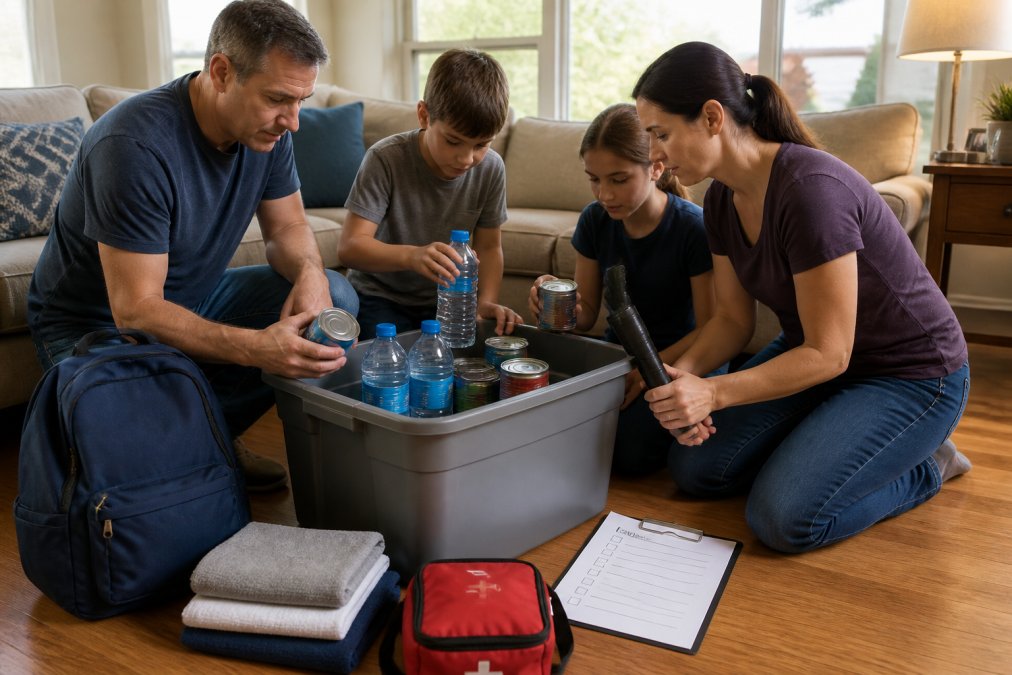
Building an emergency kit for hurricane season involves more than buying a pre-packed box and forgetting about it. The real challenge is assembling supplies that fit your family's specific needs, storing them properly, and knowing how to use them when the power is out and roads are flooded. An emergency kit for hurricane is a collection of essential supplies stored in a durable container that supports your household for at least 72 hours of self-sufficiency.
Why a Standard Checklist Isn't Enough for Hurricane Season
Most disaster supply checklists tell you what to buy but ignore the two questions that actually determine survival: how much, and for how long. A generic list might say "water" without clarifying that you need one gallon per person per day, or "food" without noting that a manual can opener is mandatory if you pack canned goods.
The bigger gap is maintenance. Heat, humidity, and poor storage conditions can shorten the life of some emergency supplies. Batteries, food, medications, and important documents should be checked regularly and stored according to manufacturer recommendations whenever possible. Hurricane season runs through November, so a truly effective plan includes a scheduled review cycle, not just a one-time shopping trip.
The Core Emergency Kit for Hurricane: 7 Categories to Cover
Think of your kit as seven distinct modules rather than one pile of gear. This structure makes packing, inventorying, and replacing items far simpler.
Water and Hydration Supplies
Store at least one gallon of water per person per day for drinking and basic sanitation (ready.gov). For a family of four planning a three-day supply, that is 12 gallons minimum. Commercially bottled water is the simplest option, but adding purification tablets or a portable filter provides a backup when stored supplies run out.
Non-Perishable Food Requirements
Pack a three-day supply of food that requires no refrigeration and little to no preparation. Canned meats, beans, peanut butter, granola bars, dried fruit, and ready-to-eat cereals are solid choices. Include a manual can opener and avoid salty foods that increase thirst. Rotate items every six months.
First Aid Kit Essentials
Your first aid kit should cover cuts, burns, sprains, and medication needs. Include adhesive bandages in multiple sizes, sterile gauze, antiseptic wipes, tweezers, scissors, and medical tape. If you take prescription medications, talk with your doctor or pharmacist about creating an appropriate emergency supply. Keep an up-to-date list of your medications, dosages, medical needs, and allergies in a waterproof container.
Sanitation and Hygiene Items
When sewage systems fail, sanitation becomes a health priority. Pack moist towelettes, hand sanitizer, garbage bags, plastic ties, and a portable toilet option if you have space. Include toothbrushes, toothpaste, soap, and feminine hygiene products.
Lighting, Tools, and Safety Gear
A battery-powered or hand-crank flashlight is essential, but pack one per person rather than one per household. Add extra batteries, a multi-tool, a whistle, dust masks, safety goggles, and leather gloves for clearing debris. A manual can opener belongs here if not stored with food.
Clothing, Bedding, and Personal Documents
Store one complete change of clothing and sturdy shoes per person, plus an emergency blanket for each family member. Keep personal documents, including insurance policies, identification, and medical records, in a waterproof container. An emergency contact list with out-of-state contacts should sit on top.
Emergency Water Storage Requirements Per Person
The standard emergency water guideline is at least one gallon per person per day for drinking and sanitation. For a family of four, that means at least 12 gallons for three days and 56 gallons for two weeks. If possible, work toward storing a two-week supply.
Your household may need additional water depending on individual circumstances. Consider storing extra for pets, hot climates, illness, pregnancy, or other needs that can increase water use. Calculate your household's baseline by multiplying the number of people by the number of days you are preparing for, then add extra water based on your household's specific needs.
Ready.gov water storage guidance confirms the one-gallon-per-person-per-day baseline and offers additional tips for safe storage.
Container Options and Trade-Offs
Your choice of container affects shelf life, portability, and space. The three most common options are:
- Commercially bottled water (16.9 oz to 1-gallon jugs): The simplest option; follow the manufacturer's expiration or best-by date and store it according to the label directions.The trade-off is bulk, 56 individual 16.9-oz bottles weigh about 60 pounds and take up significant shelf space. Gallon jugs are more efficient but harder to grab quickly during an evacuation.
- Food-grade 5-gallon collapsible containers: These store flat when empty and hold 40 pounds of water when full. They are ideal for sanitation and cleaning water, not for drinking, because the spigots and spouts are harder to keep clean over long storage periods. Replace the water every six months.
- 55-gallon drums: The most space-efficient option for a two-week supply, but they require a dedicated area, a hand pump or siphon, and a water treatment plan. They are best for shelter-in-place scenarios, not for evacuation.
Storage Conditions and Rotation Schedule
Store emergency water in a cool location away from direct sunlight and toxic substances such as gasoline and pesticides. For commercially bottled water, follow the expiration or best-by date provided by the manufacturer. If you fill your own containers with water, label them with the storage date and replace the water every six months.
Use food-grade water storage containers whenever possible. Before filling a container, wash it with soap and rinse it completely. To sanitize it, CDC recommends a solution of 1 teaspoon of unscented household chlorine bleach containing 5% to 9% sodium hypochlorite mixed with 1 quart (4 cups) of water. Close the container, shake the solution so it touches all interior surfaces, wait at least 30 seconds, pour it out, and allow the container to air-dry before filling it with clean water.
The Hidden Gap: Water You Cannot See
Most checklists focus on drinking water, but a hurricane kit also needs water for hygiene, cooking, and cleaning. The one-gallon-per-person-per-day baseline includes drinking and sanitation, but individual household needs vary. Consider storing additional water if you expect to prepare dehydrated meals, clean wounds, care for pets, or have other needs that increase water use.
A practical pattern is to store drinking water in commercially bottled form and dedicate a separate set of 5-gallon collapsible containers for non-potable uses like flushing toilets and basic cleaning. This split prevents you from dipping into your drinking supply for tasks that do not require potable water.
Testing and Treating Emergency Water
Boiling: When local authorities advise that water may be unsafe because of germs, boiling is one of the most reliable treatment methods. Follow current guidance from public health authorities for boiling time and any special instructions for your location.
Chemical disinfection: Chlorine dioxide, chlorine, iodine, or other water-disinfection products can kill many germs when used according to their labels, but their effectiveness varies by organism and product. Always follow the manufacturer's directions.
Portable water filters: Filters vary considerably in what they remove. Some can remove parasites and bacteria but may not remove viruses or chemical contaminants. Check the manufacturer's specifications and use additional treatment when necessary. When possible, follow CDC or local public-health guidance for the specific water source involved.
Build your water storage gradually. Start with a three-day supply of commercially bottled water, then add a 5-gallon collapsible container for sanitation use, and finally expand to a two-week supply as your storage space and budget allow. The goal is not to buy 112 gallons at once, it is to have a system that scales with your household's actual needs.
How Long Should Emergency Supplies Last?
Emergency supplies should cover a minimum of 72 hours, but hurricane recovery often takes longer. Power outages can stretch for a week or more, and road closures may delay resupply. Building toward a two-week supply is the more realistic target for hurricane-prone regions.
This shifts how you shop. Instead of buying one kit, you stock gradually: a few extra cans of food each grocery trip, an additional case of water monthly, and one new tool or supply per paycheck. This approach spreads cost and makes a larger supply achievable without a single large expense. FEMA preparedness guidelines recommend maintaining supplies for at least two weeks when a disaster is likely to disrupt services for an extended period.
Shop Hurricane Survival Kits →
Choosing a Portable Power Station for Hurricane Outages
A portable power station for hurricane outages keeps phones charged, medical devices running, and small appliances operational when the grid goes down. Unlike a gas generator, these units are safe to use indoors, silent, and require no fuel storage.
When selecting a portable power station, focus on battery capacity, output capability, and the devices you actually need to operate. Runtime varies substantially depending on each device's power consumption, how many devices are connected, and conversion losses. Compare the power station manufacturer's specifications with the wattage and runtime requirements of your essential equipment before choosing a unit. If you plan to use solar charging during an extended outage, confirm that the power station supports compatible solar panels.
Go Bags, Digital Preparedness, and Post-Storm Maintenance
A Go Bag is a grab-and-go version of your emergency kit for hurricane evacuation orders. Keep it packed near an exit with a three-day supply of food, water, medications, and critical documents. Every household member should know where it lives and what is inside.
Psychological First Aid and Mental Health
Hurricanes are traumatic events, and children especially struggle with disrupted routines and uncertainty. Pack comfort items like a favorite book, a small toy, or a deck of cards. Include a notebook and pen for older kids and adults to process their experiences. Designate a family meeting point and practice your communication plan so everyone knows how to reconnect if separated.
Budget-Friendly Sourcing and Kit Maintenance
You do not need to buy everything at once. Shop sales, use coupons, and purchase store-brand items where quality allows. Rotate your food and water supplies into your regular pantry, consuming and replacing them before they expire. Schedule a full kit review every six months, timed to the start of hurricane season and its midpoint, checking battery dates, medication expiration, and document accuracy.
Digital Preparedness: The Layer Most Checklists Miss
Standard preparedness guides stop at physical gear. But in a hurricane, your phone is your lifeline, for weather updates, emergency alerts, communication with family, and insurance claims. A dead phone or a lost cloud account can be as disabling as a missing first aid kit. Digital preparedness means securing your data, your access, and your ability to communicate before the storm hits.
Step 1: Back Up Critical Documents to the Cloud and a Physical Drive
Scan the following documents at 300 DPI and save them as PDFs: driver's licenses, passports, Social Security cards, insurance policies (homeowners, flood, auto, health), medical records and prescriptions, property deeds or lease agreements, and recent utility bills that prove residency. Upload these to a secure cloud service, Google Drive, iCloud, or Dropbox all offer free tiers sufficient for document storage. Enable two-factor authentication on the account that holds these files.
Do not rely on the cloud alone. Power outages can last for weeks, and cellular networks can be congested or down. Store an encrypted USB drive with the same PDFs in a waterproof pouch inside your Go Bag. Use a USB drive with hardware encryption, such as those from Kingston or Apricorn, and write the password on a piece of paper stored separately in your kit, not on the drive itself.
Step 2: Download Offline Maps and Critical Information
Before hurricane season starts, open Google Maps or Apple Maps on your phone and download offline maps of your county and the surrounding region. These maps work without cellular service and include roads, landmarks, and points of interest. In the Google Maps app, tap your profile picture, select "Offline Maps," then "Select Your Own Map," and drag the rectangle to cover your area. Update these maps every few months, as road closures and new construction change the layout.
Beyond maps, save the following to your phone's notes app or a dedicated offline document:
- The addresses and phone numbers of local shelters, hospitals, and police stations
- Your out-of-state emergency contact's full contact information
- Your insurance policy numbers and the claims phone number
- A list of your medications, dosages, and prescribing doctors
- Your home's utility account numbers (power, water, gas)
Step 3: Program Emergency Contacts and Enable Alerts
Add an "In Case of Emergency" (ICE) contact to every family member's phone lock screen. On iPhone, this is done in the Health app under Medical ID. On Android, it is under Settings > Safety & Emergency. These contacts are accessible even when the phone is locked, which matters if a first responder needs to reach your family.
Enable Wireless Emergency Alerts (WEA) on every phone. These are the government-issued alerts that appear as banners for tornado warnings, hurricane evacuation orders, and AMBER alerts. On iPhone, go to Settings > Notifications and scroll to "Government Alerts." On Android, the path varies by manufacturer but is typically under Settings > Safety & Emergency > Wireless Emergency Alerts. Ensure the toggle for "Extreme Threats" and "Severe Threats" is on.
Step 4: Protect Your Devices from Water and Power Loss
A phone is useless if it is waterlogged or dead. Store a waterproof phone pouch or a ziplock bag for each device in your Go Bag. Pack a portable power bank with at least 10,000 mAh, enough to charge a typical smartphone two to three times, and keep it charged. For longer outages, the portable power station discussed earlier is the more robust solution.
Post-Storm Digital Protocol
After the storm passes, your digital preparedness shifts from survival to recovery. Follow this sequence:
- Photograph and video everything. Before you move debris, touch anything, or begin cleanup, document all damage to your home, vehicles, and property. Take wide shots of each room, close-ups of specific damage, and videos that show the extent of the destruction. These files are your primary evidence for insurance claims.
- Upload the media immediately. As soon as you have cellular or Wi-Fi service, upload all photos and videos to your cloud drive. This protects them from phone loss, water damage, or theft during the chaos of recovery.
- File your claim digitally. Most major insurers now allow you to file a claim through their mobile app or website. Having your policy number and the photos ready speeds up the process significantly.
- Check FEMA registration. If your area receives a federal disaster declaration, you may be eligible for FEMA Individual Assistance. Registration is done online at DisasterAssistance.gov or through the FEMA app. Have your Social Security number, pre-disaster address, and insurance information ready.
The Six-Month Digital Review
Digital files degrade, passwords change, and apps update. Schedule a digital review alongside your physical kit maintenance. Every six months, at the start of hurricane season and its midpoint, do the following:
- Re-download offline maps to capture road changes
- Verify that your cloud backup is accessible and contains current documents
- Update the ICE contacts on every family member's phone
- Check that your power bank is charged and functional
- Confirm that your encrypted USB drive still opens and contains the latest files
- Test your emergency alert settings on each device
This routine takes 20 minutes and ensures that when the storm warning comes, your digital lifeline is as ready as your water bottles.
Conclusion: Your Next Steps for a Complete Emergency Kit for Hurricane Season
At Already Survival, we stock practical emergency-preparedness gear to help you build a kit around your household's needs, including first aid supplies, emergency kits, food, shelter, and other preparedness essentials. Browse our selection to identify the supplies your household still needs and build your hurricane preparedness kit over time.
Frequently Asked Questions
What are 10 items in an emergency kit for a hurricane?
A practical emergency kit for hurricane season should include: 1) One gallon of water per person per day, 2) A three-day supply of non-perishable food, 3) A manual can opener, 4) A battery-powered or hand-crank radio, 5) A flashlight with extra batteries, 6) A first aid kit, 7) A whistle to signal for help, 8) Dust masks and moist towelettes, 9) An emergency blanket, and 10) Copies of personal documents in a waterproof container.
How much water should I store per person for a hurricane?
The standard emergency water storage requirement is one gallon per person per day. This covers drinking, cooking, and basic hygiene. For a three-day supply, store at least three gallons per person. If you have space, aim for a two-week supply, which is the recommended duration for areas that may face extended power outages and water service interruptions after a major storm.
How long should my hurricane emergency kit last?
Your emergency kit for hurricane season should sustain your household for a minimum of 72 hours, which is the standard disaster preparedness guideline. However, a more resilient plan targets a two-week supply. This covers the period when roads may be impassable, stores remain closed, and power and water services are still being restored after a significant hurricane.
What is the best power source for hurricane preparedness?
A portable power station can be a flexible option for keeping essential electronics powered during a hurricane outage. Choose a model with enough capacity to charge phones, run a small medical device, and power a radio. Look for one that can be recharged from a car outlet or a solar panel, since grid power may be down for days. Battery-powered and hand-crank options are essential backups for smaller electronics.


