


Table of Contents
- What Separates Emergency Sleeping Bags From Regular Sleeping Bags
- How to Read a Cold-Weather Sleeping Bag Temperature Rating
- Cold-Weather Emergency Sleeping Bags for Different Needs
- How to Stay Warm in a Sleeping Bag When Temperatures Drop
- Building a Cold-Weather Emergency Sleep System
- Common Mistakes That Undermine Cold-Weather Sleep Gear
- Conclusion
- Frequently Asked Questions
Last Updated: October 5, 2026
What Separates Emergency Sleeping Bags From Regular Sleeping Bags
Emergency sleeping bags are built to keep a person alive through an unexpected cold night, not to deliver comfort on a planned trip. Regular sleeping bags prioritize comfort, room to move, and features like draft collars and pad sleeves.
The core difference comes down to three things: how the bag traps heat, how it handles moisture, and how much space it takes up when stored. An insulated emergency sleeping bag uses actual fill, like down or synthetic, to trap warm air.

That gap in construction explains why a bag rated for cold weather and one built for a mild night are not interchangeable.
Ready.gov emergency supply guidance
How to Read a Cold-Weather Sleeping Bag Temperature Rating
A cold-weather sleeping bag temperature rating is the manufacturer's estimate of the lowest temperature at which the bag should keep an average sleeper warm, and it is almost always optimistic. The tag reflects a standardized test, not your body, clothing, or the pad under you.

Comfort Rating vs. Lower Limit vs. Extreme Rating
These three terms appear on most quality bags, and they are not synonyms.
- Comfort rating: The temperature at which an average adult woman in light clothing can sleep comfortably. Trust this number for planning.
- Lower limit: The temperature at which an average adult man can sleep without waking from cold. A survival threshold, not a comfort one.
- Extreme rating: A survival-only figure where cold injury risk rises sharply. Treat it as the point where the bag stops protecting you and starts buying time.
If you only remember one thing, remember this: plan around the comfort rating, not the lower limit. Most people who sleep cold should add a margin on top of that.
Why the Tag Number Is Not the Whole Story
A rating is measured under controlled conditions that rarely match a real night outdoors. The test assumes a dry bag, still air, a defined base layer, and a specific insulating pad.
Four factors move the number the most:
- Wind. Moving air strips the warm boundary layer around the bag. A windproof shell or a bivy over the bag reduces that loss.
- Moisture. Damp insulation conducts heat away faster than dry insulation. Breath, sweat, and condensation all degrade performance overnight.
- Clothing. A dry base layer and dry socks add measurable warmth. Damp clothing does the opposite.
A bag rated at a given comfort temperature often feels colder in wind and wet conditions, and warmer over a good pad with dry layers. That is why two people in the same bag can have very different nights.
How to Match a Rating to Your Situation
Use the rating as a starting point, then adjust for how you actually sleep:
- Cold sleeper: Add margin above the comfort rating. A liner or extra ground insulation closes the gap.
- Warm sleeper: The comfort rating may be conservative, but keep margin for weather that turns worse than forecast.
- Vehicle or home emergency kit: The bag sits in a cold trunk or unheated room. Choose based on the coldest realistic overnight temperature for your region, not the average.
What Emergency Bags Do and Do Not Promise
Emergency bivies and reflective sacks are often labeled with a temperature, but that figure describes survival, not comfort. They reflect body heat and block wind and moisture, slowing heat loss, but add little or no insulation of their own.
Treat any emergency bag's temperature figure as a limit to avoid, not a target. If conditions are forecast near that number, add ground insulation, dry layers, and a shell, or plan to be inside a shelter.
NOAA winter weather safety resources
Cold-Weather Emergency Sleeping Bags for Different Needs
The right bag depends on your climate, how you'll carry it, and whether the trip is planned or a backup. Below are categories that match real situations.
Down Bags for Cold, Dry Conditions
Down fill delivers strong warmth for its weight and compresses well, making it a natural fit for cold, dry conditions. The tradeoff is moisture: down loses loft when wet, so it belongs in a dry climate or inside a waterproof shell.
Two options in our lineup use 1,000g of grey duck down with a 20D nylon shell:
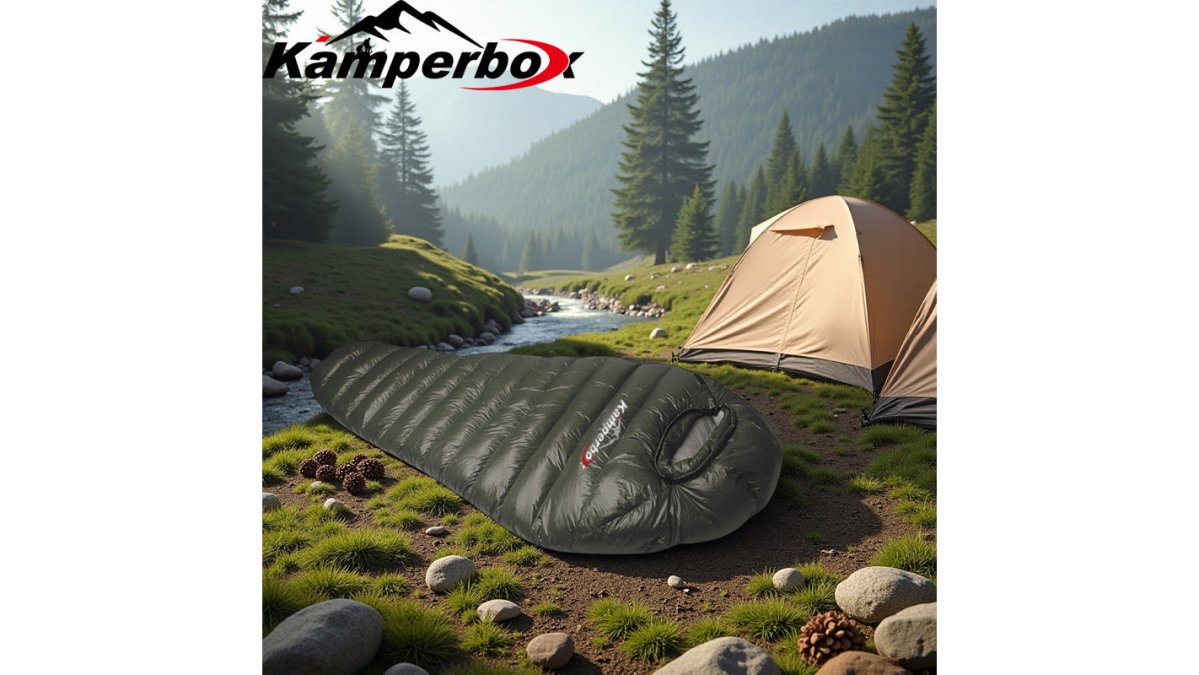
- Kamperbox Waterproof Down Sleeping Bag - Winter Camping & Survival: wind-resistant, waterproof shell, connectable left and right zippers for a double bag.
- Kamperbox Down Sleeping Bag for Cold Weather Winter Camping: same 1,000g down fill and 20D nylon shell, with connectable zippers for couples or group use.
Synthetic and Mummy Bags for Wet or Mixed Conditions
Synthetic fill keeps more of its warmth when damp, making it the safer pick for wet or unpredictable weather. A mummy shape adds efficiency by cutting dead air space around the body.
Kamperbox Waterproof Down Sleeping Bag – Winter Camping & Survival →

- Lightweight Mummy Sleeping Bag 5°F-20°F: rated as low as 5°F, contoured fit, full-length zipper, compression stuff sack included.
- Portable 4-Season Waterproof Sleeping Bag for Adults & Kids: water-resistant shell, sized for adults and kids, suited to backpacking and indoor emergency use.
- Kamperbox Ultralight Sleeping Bag: 1,100g synthetic down-style fill with baffle construction for even heat distribution.
| Bag | Fill Type | Shell | Best For |
|---|---|---|---|
| Kamperbox Waterproof Down | 1,000g grey duck down | 20D nylon, waterproof | Cold, dry conditions |
| Kamperbox Down Winter | 1,000g grey down | 20D nylon | Cold, dry conditions |
| Lightweight Mummy | Insulated mummy build | Insulated mummy build | Serious cold-weather trips |
| Portable 4-Season | Waterproof | Water-resistant shell | Families, mixed conditions |
| Kamperbox Ultralight | 1,100g synthetic down-style | 20D nylon | Camping and outdoor use |
NOAA winter weather safety resources
How to Stay Warm in a Sleeping Bag When Temperatures Drop
Knowing how to stay warm in a sleeping bag comes down to managing three things: trapped air, moisture, and cold coming up from the ground. Get those right and a mid-range bag can beat a warmer one used badly.
- Change out of damp clothing before you get in. Wet base layers pull heat away all night.
- Wear a dry hat and socks. Heat loss from the head and feet is significant.
- Eat before bed. Digestion generates heat, and a warm drink helps too.
Building a Cold-Weather Emergency Sleep System
A cold-weather emergency sleep system is the combination of bag, pad, liner, and shell working together. The bag traps heat above you, the pad blocks cold from below, a liner adds warmth and protects the bag, and a bivy or shell blocks wind and moisture.
Ground Insulation: The Piece Most Kits Are Missing
Ground insulation is the most overlooked part of the system, and often the difference between a cold night and a dangerous one. A sleeping bag compresses under your body weight, flattening the fill beneath you and leaving almost no insulation between you and the ground.
Two broad pad types cover most needs:
- Closed-cell foam pads. Light, inexpensive, and immune to punctures. They do not compress or absorb water, making them reliable for vehicle kits and bug-out bags. The tradeoff is bulk and less cushioning.
- Inflatable pads. Thicker, more comfortable, and pack smaller than foam. They depend on staying airtight, so a puncture in the field leaves you with little insulation.
For cold-weather use, look at how a pad is built rather than how thick it feels. A pad's insulating value comes from trapped air and reflective layers, not loft. Stacking a foam pad under an inflatable pad adds warmth without replacing gear.
If you sleep in a vehicle, on a floor, or on frozen ground, assume you need more ground insulation than a summer camping setup provides.
Liners, Layering, and Shells
Layering works like it does with clothing. Start with a dry base layer, add the bag, then a liner if you need more warmth.
If you combine a bag with a bivy, the bivy goes on the outside as a wind and moisture barrier. It adds little insulation on its own but keeps wind and spray off the bag and can raise the system's effective warmth.
Matching the System to the Scenario
The right combination depends on where the kit lives and how long it needs to work:
- Backpacking: Prioritize a pad with a good warmth-to-weight ratio, a bag near your comfort rating, and a liner for margin. Test the setup on a short trip before relying on it.
- Vehicle kit: Bulk matters less than reliability. A closed-cell foam pad and an insulated bag stored uncompressed will still work after months in a trunk.
- Home emergency kit: Space is usually available, so a thicker pad and a bag with a generous comfort margin make sense, especially if heat may be out for more than a night.
Common Mistakes That Undermine Cold-Weather Sleep Gear
Most cold-weather sleep failures trace back to avoidable errors rather than bad gear. Here are the most common.
- Trusting the extreme rating. It is a survival figure, not a comfort one. Plan around the comfort rating with margin to spare.
- Skipping the sleeping pad. Without ground insulation, the bag's bottom half does almost nothing.
- Sleeping in the clothes you wore all day. Damp layers wick heat away from your body.
- Over-tightening the bag. Compressing insulation against your body reduces the trapped air that keeps you warm.
- Storing a bag compressed. Long-term compression damages loft, especially in down.
- Ignoring condensation. Breath and sweat build moisture inside the bag. Vent when you can.
Conclusion
Cold weather exposes every weak point in a sleep setup, so the bag you choose should match your climate, carry method, and whether the trip is planned or a backup.
At Already Survival, we stock sleeping bags and preparedness gear chosen for practical, real-world use, backed by free shipping on all orders, a 30-day return policy for unused items, and secure, encrypted checkout.
Frequently Asked Questions
What sleeping bag can handle the coldest temperature?
There is no single coldest-rated bag. The right choice depends on the lowest temperature you realistically expect, your sleeping pad, and whether you sleep warm or cold. A mummy-style bag rated for temperatures as low as 5°F is built for serious cold-weather use and packs into a compression stuff sack, while a down bag with a high fill weight suits cold, dry conditions. Pair any bag with a pad that insulates you from the ground, because a bag compresses under your body and loses much of its warmth there.
How is an emergency sleeping bag different from a regular sleeping bag?
Emergency sleeping bags are built around compact size, low weight, and one-job reliability, so they often use reflective or lightweight materials and pack down small enough for a go bag or vehicle kit. Regular sleeping bags focus on comfort and repeated use, with shaped hoods, draft collars, and durable shells. A regular cold-weather bag usually gives you more insulation and a wider comfort range, which matters if you may need to sleep in the cold for more than one night.
Do emergency sleeping bags actually work?
They work within limits. Reflective and lightweight emergency bags slow heat loss and block wind and moisture, which helps in a short, unexpected night out. They are not a substitute for an insulated bag in sustained freezing conditions. How well any bag works also depends on your clothing layers, a sleeping pad underneath you, and whether the bag stays dry. Treat an emergency bag as a backup layer in a larger sleep system rather than your only cold-weather plan.
What features should you look for in a cold-weather emergency sleeping bag?
Look at the temperature rating and what it actually means, the insulation type and fill weight, the shell's wind and water resistance, and the packed size and total weight. A full-length zipper helps with ventilation and entry, and connectable left and right zippers let two bags join into a double. Check the lining for comfort against your skin and whether a compression sack is included. If you run cold or sleep outdoors often, a shaped mummy bag with a hood retains more heat than a rectangular design.
Can an emergency sleeping bag replace an insulated sleeping bag?
For a planned cold-weather trip, no. An insulated bag with a real temperature rating and enough fill is what keeps you warm through a freezing night. An emergency bag makes more sense as a supplement: keep it in a vehicle kit or go bag for unplanned nights, or layer it over or inside an insulated bag for extra warmth. If you want one bag that covers both roles, choose a cold-rated mummy or down bag and store it compressed with the rest of your emergency gear.


