


Table of Contents
- Start Here: What a 72 Hour Kit Is and Why Three Days Matters
- Your Emergency Kit Checklist: The Core Categories
- How to Store Emergency Water for Three Days
- Emergency Food Supply Basics for Beginners
- Go Bag vs 72 Hour Kit: What's the Difference?
- Build It on a Budget: Sourcing and Maintenance
- Frequently Asked Questions
Last Updated: October 4, 2026
Start Here: What a 72 Hour Kit Is and Why Three Days Matters
A 72 hour kit is a portable set of supplies meant to keep you fed, warm, and safe for three days after a disaster or sudden evacuation.
At Already Survival, we talk with beginners every week who feel behind before they start. Here is the good news: you do not need a perfect kit.

Below, we show you exactly how to build a 72 hour kit for beginners, category by category, without overspending.
What Counts as a 72 Hour Kit
A 72 hour kit is a grab-and-go bag holding three days of essentials for one person. It covers water, food, first aid, light, communication, warmth, sanitation, and copies of key documents. It lives near your door, not buried in a closet.
Why Beginners Should Build One Now
Emergencies rarely announce themselves. A wildfire evacuation order, a winter power outage, or a boil-water notice can arrive in minutes.
The Ready.gov emergency supply list is a solid starting point. It covers the basics most households overlook.
Start small. Add one category at a time. You will be surprised how fast a kit comes together.
Your Emergency Kit Checklist: The Core Categories
Think in categories, not one giant shopping trip. This emergency kit checklist breaks the job into four manageable parts. Build one part per weekend and you are done in a month.
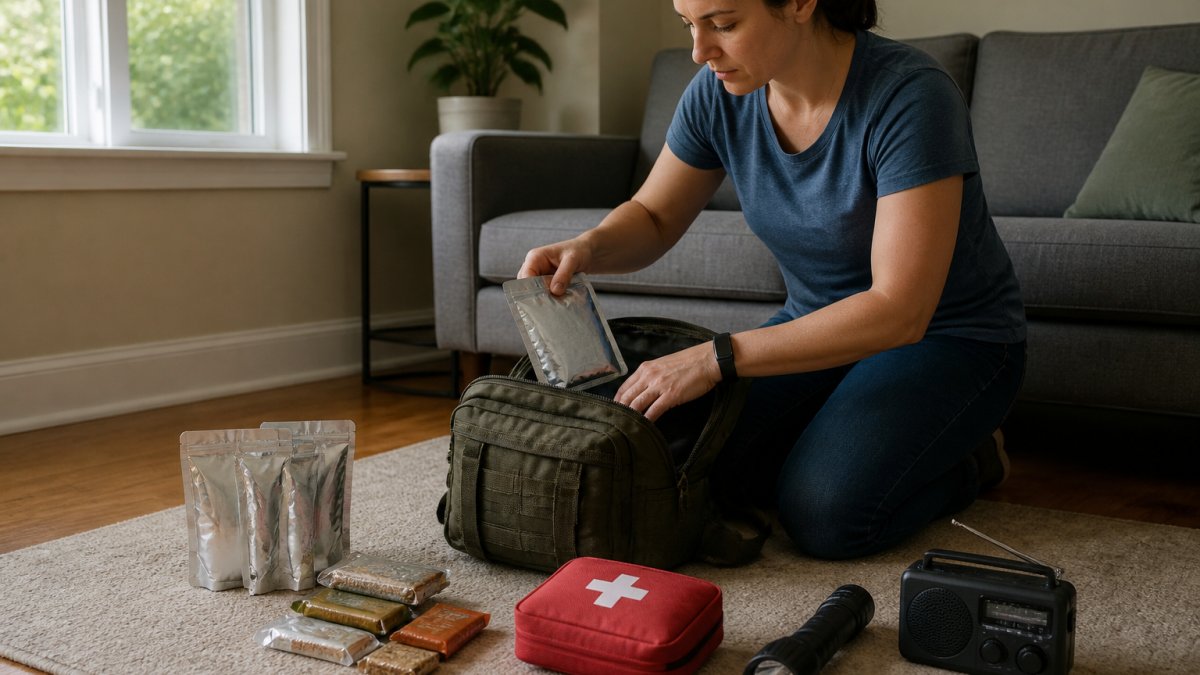
A quick note before the lists: quantities below are starting points for one adult for three days. Your numbers shift with age, health, activity level, household size, climate, and how long you actually expect to be on your own.
Food and Water
Water comes first, and it is the item beginners most often under-pack. A common planning figure is at least one gallon per person per day for drinking and basic hygiene, though hot climates, pregnancy, illness, and heavy exertion all raise that number. Food should be non-perishable and easy to eat without cooking, because you may not have gas, power, or safe indoor ventilation for a stove.
Good starter picks:
- Water pouches or sealed bottles
- Water purification tablets as a backup
- 400-calorie food bars or shelf-stable meals
First Aid and Tools
A basic first aid kit handles cuts, scrapes, and minor injuries. Pair it with a few tools that solve problems fast.
- Adhesive bandages, gauze pads, and cleansing wipes
- A first aid manual for reference
- A multi-tool and utility knife
If you have not taken a basic first aid or bleeding-control course, that training is worth more than any single item in the bag. Many communities offer low-cost or free sessions through the American Red Cross and local fire departments.
Light, Communication, and Power
Assume the power is out and cell service is spotty. You need light you can trust and a way to hear news.
- Flashlights plus extra batteries
- A battery-powered or hand-crank radio
- A power bank and cell phone charger
A written contact list matters more than people expect. When phone batteries die, a paper list still works, and it does not depend on anyone's network being up.
Sanitation, Warmth, and Documents
Sanitation protects your health when plumbing fails. Warmth protects you from the cold, and cold is the hazard beginners underestimate most in a winter outage.
- Moist towelettes and hand sanitizer
- Garbage bags and plastic sheeting
- A sleeping bag or emergency blanket
Special Needs to Add on Top
The four categories above cover a single healthy adult. Most households need a few extras layered in:
- Infants and young children: formula, bottles, diapers, wipes, and a comfort item. Follow product labeling and your pediatrician's guidance for any feeding or medication questions.
- Older adults: spare eyeglasses, hearing aid batteries, mobility aids, and a written list of current prescriptions so a pharmacist or clinician can help if you are displaced.
- Pets: food, water, a bowl, leash or carrier, waste bags, and a copy of vaccination records. Many emergency shelters cannot accept pets, so plan a pet-friendly destination in advance.
Customize for Your Most Likely Disaster
A kit that fits a hurricane coast looks different from one built for a wildfire zone or a northern ice storm. Ask yourself what your area actually faces, then add the items that specific event demands:
- Wildfire or evacuation orders: N95 masks, goggles, and a bag you can carry on foot if roads close.
- Hurricane or flooding: extra water, waterproof document storage, and a plan for where you will go if you cannot stay.
- Winter storm or ice: additional warmth layers, a way to stay warm without power, and a car kit if you drive in it.
- Earthquake: sturdy shoes by the bed, work gloves, and a plan for gas shutoff if your utility instructs it.
You do not need to solve every scenario. Pick the two most likely for your address and build for those first.
How to Store Emergency Water for Three Days
Storing emergency water is simpler than most beginners expect. Buy sealed, commercially bottled water and keep it in a cool, dark spot. That is the whole method.
A few practical rules:
1 Person 72-Hour Essential Survival Kit with First Aid →
- Store at least one gallon per person per day
- Keep water off concrete floors and away from chemicals
- Rotate stored water before it ages out
- Add purification tablets for water you find later
For guidance on safe handling, see the CDC guidance on emergency water. It explains how to make water safe when supplies run low.
Emergency Food Supply Basics for Beginners
Emergency food supply basics come down to three things: shelf life, calories, and zero cooking. Pick foods you can eat cold, straight from the package.
What works well:
- 400-calorie food bars
- Canned beans, tuna, or fruit
- Nut butter and trail mix
- Crackers and dried fruit
Check dates twice a year. Replace anything close to expiring.
Go Bag vs 72 Hour Kit: What's the Difference?
The go bag vs 72 hour kit question trips up a lot of beginners. They overlap, but they are not the same thing.
A 72 hour kit is a full three-day supply, usually kept at home for shelter-in-place or evacuation. A go bag is a lighter grab-and-go version you can carry on foot or keep in your car.
Feature |
72 Hour Kit |
Go Bag |
|---|---|---|
Purpose |
Shelter in place or evacuate |
Leave fast on foot |
Size |
Larger, often a duffel |
Small backpack |
Supplies |
Full three days |
One day plus essentials |
Best for |
Home base |
Car, work, travel |
Many households keep both. The home kit stays stocked. The go bag stays light.
Build It on a Budget: Sourcing and Maintenance
A solid kit does not require one big purchase. The two biggest reasons beginners never finish a kit are cost and forgetting to check it later. This section tackles both.
Stretch Your Budget Without Cutting Corners
- Start with water and food. These are the cheapest categories per day of coverage and the ones you will miss most if you skip them.
- Buy multi-use items. A multi-tool, a good flashlight, and a sturdy backpack do more work than three single-purpose gadgets.
- Watch for seasonal sales. Emergency gear often goes on sale during National Preparedness Month in September and around spring storm-season promotions.
- Use store brands for basics. Generic bandages, wipes, and bottled water meet the same needs as name brands for most household kits.
Already Survival carries 72-hour survival kits sized for one to four people, if you would rather start with a complete base and customize from there. Each kit includes food and water with a 5-year shelf life, water purification tablets, first aid supplies, a hand-rechargeable flashlight, and an AM/FM radio. For households that want to build slowly, our individual food, water, and first aid collections let you add one category at a time.
A Simple Maintenance Schedule
Kits fail quietly. Batteries leak, food expires, and water ages out. A written schedule is the difference between a kit that works and a bag of expired items.
- Every 3 months: open the bag, check for leaks or damage, and confirm nothing has been borrowed and not returned.
- Every 6 months: check food and water dates, test flashlights and the radio, and replace anything close to expiring.
- Every 12 months: replace batteries, refresh stored water, and update document copies and the emergency contact list.
- After any use: restock immediately. A kit that gets used and not refilled is no longer a kit.
A practical trick: pick two dates you already remember, like the start of daylight saving time and the start of standard time. Tie your check to those weekends and you will not need a separate reminder.
Where to Store It
Storage location affects whether the kit survives the emergency. A few guidelines:
- Home kit: a cool, dry closet near an exit, not a garage or attic where heat and moisture shorten shelf life.
- Go bag: by the front door, in a mudroom, or in the trunk of your car if you commute.
- Vehicle kit: keep it out of direct sun and check it more often, since temperature swings in a parked car are hard on food, water, and batteries.
- Work kit: a smaller version in a desk drawer or locker if you spend most of your week away from home.
Home Kit vs. Vehicle Kit: Different Jobs
Beginners often build one bag and assume it covers every situation. It does not. A home kit is built for sheltering in place or a planned evacuation with a vehicle. A vehicle kit is built for being stranded on the road, possibly in cold or heat, with no shelter.
A vehicle kit usually adds:
- Jumper cables or a portable jump starter
- A reflective triangle or road flares
- A blanket and warm layers for each passenger
- A small shovel and ice scraper in cold climates
You do not need both on day one. Build the home kit first, then add a vehicle kit once the home kit is stable.
The best kit is not the biggest one. It is the one you check on a schedule and can actually carry.
Frequently Asked Questions
What should be in a 72-hour emergency kit?
A complete 72 hour kit covers food and water, first aid supplies, light and communication tools, sanitation items, warmth and shelter, and copies of important documents. Beginners can start with a pre-built kit and add personal items. Already Survival's 1 Person 72-Hour Essential Survival Kit includes food and water with a 5-year shelf life, water purification tablets, a hand-rechargeable flashlight, an AM/FM radio, and first aid supplies as a starting point.
How often should you rotate items in your emergency kit?
Give your kit a quick inspection every three months and do a more thorough check at least twice a year. Look at expiration dates on food, water, and medications, test flashlights and radios, and replace batteries. If your kit uses food and water with a 5-year shelf life, mark the purchase date and set a reminder well before that date. Replace anything you used during the year and update documents or contact lists.
Do I need a separate emergency kit for my car?
Yes, a vehicle kit serves a different purpose than a home kit. A car kit should include water, non-perishable food, a flashlight, jumper cables, a blanket, a first aid manual, local maps, and a phone charger. Store it in the trunk so it stays with you if you are stranded. A go bag you carry is separate from both. The go bag vs 72 hour kit distinction matters here: your home kit stays home, your car kit stays in the vehicle.
How do you customize a 72-hour kit for families?
Adjust quantities and add personal items based on your household. Families with infants need formula, diapers, and bottles. Households with older adults may need extra medications, glasses, and mobility items. Pet owners should add food, water, and supplies for their animals. Already Survival offers 2, 3, and 4 Person 72-Hour Essential Survival Kits with scaled food, water, and hygiene supplies. Review needs by age, health, and climate.


