


Table of Contents
- Do First Aid Kit Items Actually Expire?
- The Shelf Life of Sterile Medical Supplies and Other Components
- How to Inspect Your Kit: Signs Supplies Have Degraded
- Your First Aid Kit Maintenance Checklist
- How to Restock a First Aid Kit and Rotate Supplies
- Home vs. Workplace Kits: Different Needs, Different Rules
- Disposing of Expired Supplies Responsibly
- Conclusion: Build a Simple Rotation Habit
- Frequently Asked Questions
Last Updated: September 28, 2026
Do First Aid Kit Items Actually Expire?
Yes, many items in a first aid kit carry an expiration date, and that date matters. This guide covers what expires, what does not, and how to keep your kit ready.

Which Items Carry Expiration Dates and Which Do Not
Supplies that touch an open wound, enter the body, or rely on a chemical formula almost always carry a date. Durable materials usually do not:
- Usually dated: adhesive bandages, sterile gauze, antibiotic ointment, burn gel, antiseptic wipes, eye wash, instant cold packs, and any sealed sterile supply.
- Usually undated: scissors, tweezers, tourniquets, splints, CPR barriers, emergency blankets, and the kit bag or cabinet itself.
The Shelf Life of Sterile Medical Supplies and Other Components
The shelf life of sterile medical supplies depends on the packaging as much as the product. A gauze pad inside an intact sterile barrier is protected; the same pad in a torn wrapper is exposed to moisture, dirt, and bacteria, and no printed date can save it.
How to Read Manufacture Dates and Expiration Dates
Manufacturers typically print two dates. The manufacture date tells you when the product was made; the expiration date tells you how long the maker expects it to remain effective under proper storage.
How to Inspect Your Kit: Signs Supplies Have Degraded
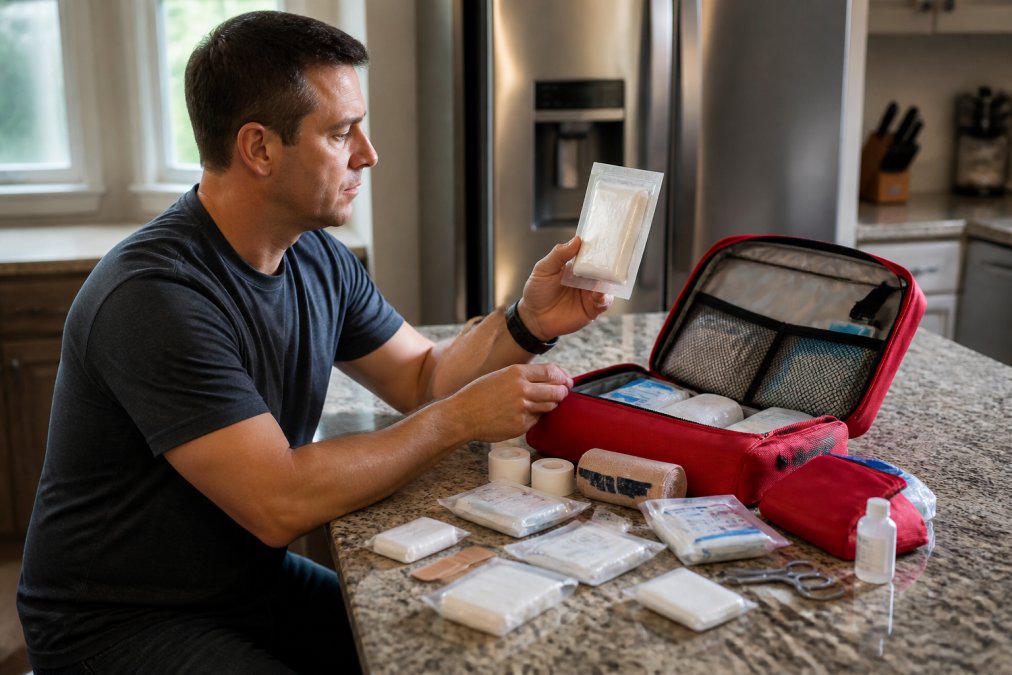
A visual inspection catches most problems before they matter, but degraded supplies often look almost normal. Knowing the mechanism behind each failure helps you recognize it in seconds.
Why Supplies Degrade: The Three Mechanisms
Almost every failure traces back to one of three processes:
- Oxidation: Adhesives, ointments, and some antiseptics react with oxygen. Heat accelerates the reaction, which is why a bandage that sat in a hot glovebox may peel off within minutes.
- Moisture ingress: A sterile barrier is only sterile while intact. A pinhole or worn fold lets in humidity, and bacteria and mold follow. A gauze pad in a torn wrapper is no longer sterile even if the printed date has not passed.
- Chemical separation: Many ointments, gels, and liquid antiseptics are emulsions or suspensions. Over time the ingredients can separate, settle, or harden.
Visual Identification Guide: What Degradation Looks Like
Use this as a quick reference during every inspection. If you see any of these signs, pull the item.
Packaging integrity
- Tears, punctures, or pinholes in a sterile pouch
- Water stains or a wrinkled, wavy wrapper
- A seal that has come unglued at the edges
- A pouch that no longer holds its shape when squeezed gently
Chemical separation in ointments and gels
- A clear or watery layer at the top or bottom of the tube
- Ointment that has hardened, turned runny, or feels gritty
- A color shift, such as a white cream turning yellow
- Any unusual odor
Sterile packaging cues
- A sterile indicator strip or dot that has changed color
- A peel pouch that has lost its seal or feels loose
- Gauze that looks yellowed, darkened, or has visible spots
Adhesive failure
- Test one bandage from each batch on clean, dry skin. If it lifts at the edges within minutes, the rest of the batch is suspect.
- Adhesive that has turned gummy, runny, or has a strong chemical smell
Tool and hardware condition
- Rust on scissors, tweezers, or clasps
- Cracks in plastic handles or cases
- Dull or nicked blades that will not cut cleanly
- A tourniquet with a faded or cracked windlass, or a strap that has lost its elasticity
Liquid and eye wash products
- Cloudy or discolored solution
- Particles or sediment visible in the bottle
- A broken or missing tamper seal
The Quiet Risk: Contamination Without Visible Damage
A supply with a compromised seal may look clean and still be unsafe for an open wound. Sterility is binary: either the barrier held or it did not, and you cannot confirm it by looking at the gauze. If the packaging is questionable, treat the item as non-sterile and replace it.
A Two-Minute Inspection Routine
You do not need to open every package. A practical pass looks like this:
- Open the kit and remove the tray or insert.
- Scan for packaging that is torn, stained, or puffy.
- Squeeze sealed packets gently to confirm the barrier is intact.
- Open one ointment or gel and check for separation or odor.
- Test one bandage from each batch for adhesion.
- Inspect tools for rust, cracks, or dull edges.
- Set aside anything questionable and restock before returning the kit to its spot.
Your First Aid Kit Maintenance Checklist
A first aid kit maintenance checklist turns a vague chore into a short, repeatable routine. Run through it twice a year, or quarterly if your kit sees heat, moisture, or heavy use.
Guardian 10-25 Person First Aid Kit →

- Remove every item and wipe out the container
- Check each expiration date and pull anything expired or close to it
- Squeeze sealed packets to confirm the sterile barrier is intact
- Test one bandage from each batch for adhesion
- Inspect tools for rust, cracks, or dull edges
- Confirm the kit still matches your household or workplace size
- Restock pulled items and note the replacement date
Write the inspection date on a piece of tape inside the lid. The next person to open the kit, including a babysitter or coworker, can see at a glance when it was last checked.
Setting an Inspection Schedule That Works
Twice a year works for most homes. Tie it to something you already do, like changing smoke detector batteries or adjusting clocks for daylight saving, so the task does not depend on memory.
How to Restock a First Aid Kit and Rotate Supplies
Restocking is not just topping up. Supply rotation means new items go to the back and older items move forward, so nothing sits untouched for years.
- Pull everything out and sort by expiration date.
- Set aside anything expired or damaged for disposal.
- Place the oldest still-usable items where they will be reached first.
- Add new supplies behind them.
- Log what you replaced so the next check is faster.
Home vs. Workplace Kits: Different Needs, Different Rules
Home kits answer to your household. Workplace kits answer to regulators. That difference changes what you stock, how often you inspect, and what you must document.
OSHA and ANSI Standards for Workplace Kits
Workplace first aid requirements in the United States come from OSHA, which requires employers to have adequate first aid supplies available for injured workers. The specifics of what "adequate" means are detailed in OSHA's first aid requirements for workplaces, and employers should confirm current obligations for their industry and location.

Disposing of Expired Supplies Responsibly
Most expired first aid supplies can go in regular trash once they are secured, but a few items need more care.
What Can Go in Regular Trash
These items are generally safe for household trash once secured in a sealed bag:
- Expired adhesive bandages, gauze, and tape
- Dried-out or separated ointments and gels (wipe the tube clean and seal it)
- Expired antiseptic wipes that have not been used on a person
- Instant cold packs that have not been activated
- Expired eye wash that has not been opened (check local rules first)
What Needs Special Handling
Some items should not go in a household bin:
- Used or contaminated supplies: Anything with blood or bodily fluids on it should be treated as medical waste. Place it in a sealed bag and follow your local health department's guidance for disposal.
- Sharps: Lancets, needles, and any item that can puncture skin belong in a sharps container or a rigid, puncture-resistant container with a secure lid. Many communities offer drop-off sites or mail-back programs through their waste authority.
- Expired medications: Never flush medications down the toilet or pour them down a drain unless the label specifically instructs it. Many communities have take-back programs at pharmacies or police stations. For prescription medications, follow the product labeling and guidance from a healthcare professional or pharmacist.
- Liquids: Do not pour eye wash or other liquids down a drain without checking local guidance. Some municipalities have restrictions on what can enter the water system.
The Environmental Angle: Waste Less by Rotating More
A kit checked twice a year wastes less. The most effective way to reduce disposal is to avoid it:
- Buy refills instead of full replacement kits. Refills cut packaging waste and let you replace only what is expired or damaged.
- Rotate supplies so they get used before they expire. Move older but still-usable items to the kit that sees more use.
- Donate unexpired, unopened supplies. Community centers, shelters, and some clinics may accept them. Check with the organization first.
- Choose reusable tools where practical. Stainless steel scissors and tweezers can be cleaned and reused for years.
A Note on Local Rules
Disposal requirements vary by state and municipality. Check your local waste authority for rules on medical waste, sharps, and liquids. When in doubt, seal the item and ask before you throw it out.
Keep a small sharps container or a rigid, labeled container near your kit. When you replace a lancet or a needle, it goes straight into the container instead of loose into the trash. When the container is full, follow your local drop-off guidance.
Conclusion: Build a Simple Rotation Habit
The hard part of kit maintenance is not the work. It is remembering to do it before an emergency forces the issue. A twice-a-year inspection, a written date inside the lid, and a refill on hand cover almost every failure mode covered here.
Frequently Asked Questions
Do all items in a first aid kit expire?
No. Sterile items like gauze pads, bandages, and antiseptic wipes carry expiration dates because their sterile barrier or chemical potency can degrade over time. Adhesive bandages lose stickiness, and antibiotic ointment or burn gel can separate or lose effectiveness. However, durable tools such as scissors, tweezers, splints, and tourniquets do not expire. These items should still be inspected for rust, cracks, or wear. A first aid kit expiration date and replacement guide helps you sort which items need rotation and which simply need a condition check.
How often should you check your first aid kit for expired items?
A practical approach is a quick visual check every six months and a full inventory once a year. Workplaces with OSHA compliance obligations often inspect more frequently, especially in higher-risk environments. Add a check after any kit use, after seasonal changes, and before travel or storm season. Using a first aid kit maintenance checklist makes the process faster and ensures nothing gets overlooked. If you store a kit in a vehicle, check it more often because heat and cold speed up adhesive degradation and packaging wear.
What happens if you use expired first aid supplies?
Expired supplies are not automatically dangerous, but they may not work as intended. Sterile packaging that has lost its seal is no longer sterile, which raises infection risk for wound care. Antibiotic ointment past its date may have lost potency. Adhesive bandages may not stick, and burn gel can dry out or separate. For minor cuts, a compromised item is usually a minor inconvenience, but for serious wounds you want supplies you can rely on. Replace expired items and consider taking a recognized first aid or bleeding-control course.
Are there specific OSHA requirements for first aid kit expiration?
OSHA does not publish a single nationwide expiration schedule for every item. Instead, OSHA requires that adequate first aid supplies be readily available. Its non-mandatory appendix points to ANSI Z308.1 as an example of minimum kit contents and advises employers to reassess their worksite needs periodically. In practice, that means checking dates, replacing degraded supplies, and documenting inspections. Always verify current requirements for your industry and state, and follow the manufacturer's guidance printed on each product.


