


Quick Summary
For a hurricane outage, the core sanitation supplies are bar soap, liquid hand soap, hand sanitizer, moist towelettes, tissues, disposable face masks, and plastic trash bags with ties. Store them together in a sealed bin, and add a toilet alternative such as a five-gallon bucket with heavy-duty liners. Plan quantities by household size and expected outage length.
- Store the kit in one clearly labeled, sealed plastic bin or five-gallon bucket.
- Use a heavy-duty bucket with a snap-on seat and thick bag as a toilet alternative.
- Double-bag human waste and store sealed bags away from living areas until disposal guidance is issued.
- Use hand sanitizer on hands that are not visibly soiled; use wipes or water and soap otherwise.
- Add travel-size soap, sanitizer, wipes, and trash bags to your go-bag for evacuation.
Table of Contents
- Why Sanitation Gets Harder When Water Goes Out
- Core Hygiene Items to Keep on Hand
- Building an Emergency Sanitation Kit
- Toilet Alternatives During a Water Outage
- Emergency Handwashing Supplies When Water Is Scarce
- Handling Household Waste and Trash During an Outage
- Adding Sanitation Supplies to Your Hurricane Go-Bag Checklist
- Frequently Asked Questions
What Sanitation Supplies Do You Need for a Hurricane Outage?
Last Updated: October 31, 2026
Why Sanitation Gets Harder When Water Goes Out
When a hurricane knocks out power and water service, sanitation becomes one of the first problems households face.
FEMA guidance on preparing for power outages
Sanitation problems tend to build over several days. A few missed handwashing opportunities may not matter much on day one, but by day three, food preparation, waste storage and personal cleanliness can become real concerns.
The sections below cover the supplies that matter most, how to organize them, and how to handle the gaps that appear when running water is unavailable.
Core Hygiene Items to Keep on Hand
Start with the basics that you use every day. A reasonable core list includes:
- Bar soap and liquid hand soap
- Hand sanitizer
- Moist towelettes and wipes
- Tissues and pocket tissue packs
- Toothbrushes and toothpaste
- Feminine hygiene products and disposable razors
- Disposable face masks
- Plastic trash bags and plastic ties
Prepackaged hygiene sets can save time. You can browse the food, water and hygiene category to compare supplies in one place.
Check expiration dates on sanitizers, wipes and medications at least once a year. Replace anything that has passed its date or dried out.
The core hygiene items covered in this article are summarised below for quick reference.
Item |
Category |
Note |
|---|---|---|
Bar soap and liquid hand soap |
Cleaning |
Everyday handwashing basics |
Hand sanitizer |
Cleaning |
Use on hands not visibly soiled |
Moist towelettes and wipes |
Cleaning |
Quick cleaning when water is limited |
Tissues and pocket tissue packs |
Personal care |
Keep in go-bag and kit |
Disposable face masks |
Personal care |
Include in core list |
Plastic trash bags and plastic ties |
Waste |
Needed for sealing waste |
Building an Emergency Sanitation Kit
A sanitation kit works best when it is stored in one clearly labeled container. A sealed plastic bin or a 5-gallon bucket keeps supplies dry and easy to find.
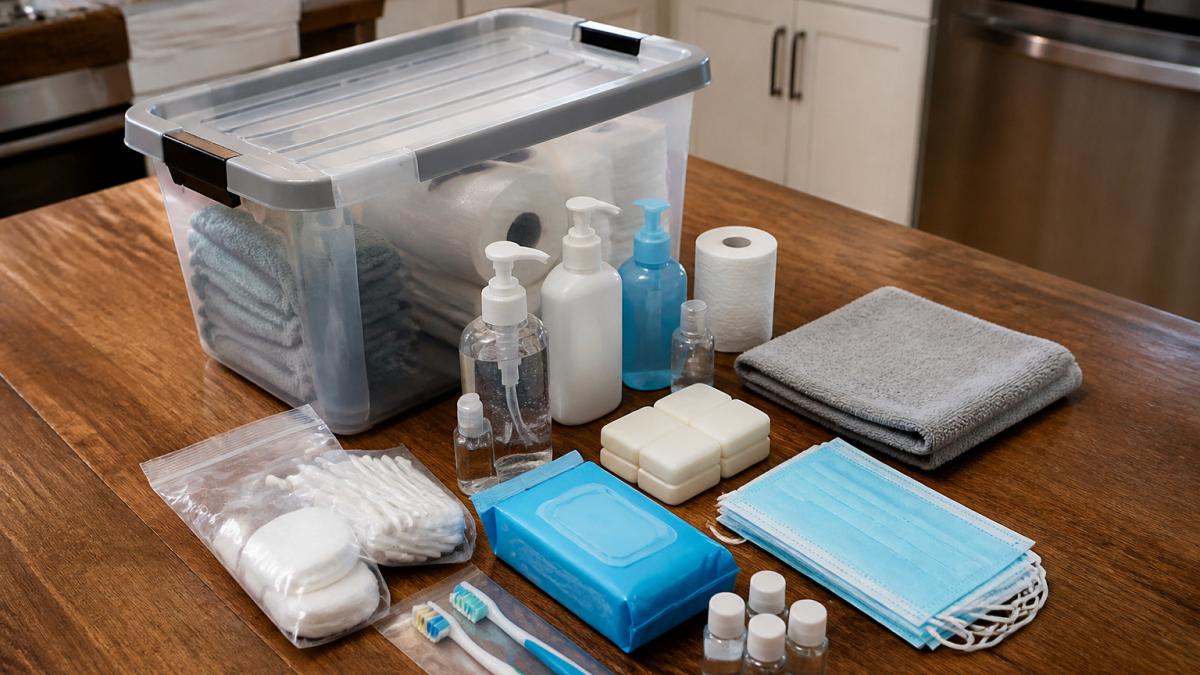
!A family's organized hygiene supplies laid out on a kitchen table beside a sealed plastic storage bin, soap, wipes, and face masks visible
Consider the following when you assemble it:
- Quantity by household size. A single person needs far less than a family of four. Multiply your per-person needs by the number of people and the number of days you want to cover.
- Duration of the outage. Plan for at least several days. Longer outages require more supplies and possibly a restock plan.
- Special needs. Infants, older adults and people with medical conditions may need additional items such as diapers, incontinence supplies or prescribed hygiene products.
- Storage conditions. Keep the bin in a cool, dry place away from direct sunlight.
Pre-assembled kits can serve as a starting point. The Hurricane Emergency Kit includes hygiene and sanitation items alongside food, water and first aid supplies, so you can compare it with a kit you build yourself.

Toilet Alternatives During a Water Outage
Flush toilets stop working when water service fails or pressure drops. Households without a backup plan often end up improvising, and improvised setups are where sanitation problems start. Planning a toilet alternative in advance keeps waste contained and out of living areas.
CDC guidance on sanitation during emergencies
Portable toilet options
There are three common approaches, and each fits a different situation:
- Portable camping toilets with disposable bags or a replaceable waste cassette. These are the closest thing to a normal toilet. Bag-based models use a liner that you seal and remove after each use; cassette models store waste in a sealed tank that you empty later. They work well for households that want a dedicated toilet in a bathroom or garage and have space to store it.
- Five-gallon bucket toilets. A heavy-duty bucket fitted with a snap-on toilet seat and lined with a thick bag is the most common improvised option. It is simple, stores flat, and works for short outages. The trade-off is odor and handling: the bag must be sealed and removed carefully after each use or at least daily.
- Pour-flush methods using stored water. Where the toilet bowl is intact and only supply is interrupted, pouring a bucket of stored water directly into the bowl can clear waste. This only works while the drain line is functioning and should not be used if the sewer system is backed up or the bowl is not draining. If your home’s septic system relies on an electric pump, the pump will not run during a power outage, so limit flushing until power returns.
Setting up a toilet station
Whichever option you choose, set it up before you need it:
- Pick a location away from food prep and sleeping areas. A bathroom, garage, or covered outdoor spot works. Keep it ventilated.
- Line the container before first use. Use a heavy-duty bag rated for the load, and add a small amount of absorbent material such as cat litter or sawdust to the bottom to control moisture and odor.
- Keep supplies at the station. Store extra bags, ties, gloves, disinfectant, and hand sanitizer within reach so no one has to search mid-use.
- Seal after each use. Twist and tie the bag, or close the cassette lid, and keep the container covered.
Containment and disposal
Waste must stay contained until it can be disposed of safely. Double-bag human waste: place the sealed liner inside a second heavy-duty bag, tie it, and label it clearly.
Portable Camping Shower Tent with Solar Shower Bag Included →
Bleach and disinfectant help reduce odor and germs on surfaces, but they do not replace proper containment. Keep the toilet station clean, wear disposable gloves when handling bags, and wash or sanitize hands afterward.
Emergency Handwashing Supplies When Water Is Scarce
Handwashing matters most before food preparation, after using the toilet and after handling waste. When running water is limited, you can still keep hands clean with a few simple tools:
- Alcohol-based hand sanitizer with at least 60 percent alcohol
- Moist towelettes for quick cleaning
- A small container of water with a pump or spout for controlled use
- Disposable gloves for handling waste
Hand sanitizer works best on hands that are not visibly soiled. If hands are dirty or greasy, use wipes or a small amount of water and soap first. A portable hydration bag or water carrier makes it easier to dispense water for hand cleaning without wasting it. A tactical belt bag can keep small hygiene items such as sanitizer and wipes within reach on the go.
Handling Household Waste and Trash During an Outage
Trash collection often stops during a storm, and waste can attract pests and spread odors quickly. The goal is to keep waste sealed, separated, and out of living areas until collection resumes.
Plan quantities by household and duration
Most checklists say "stock extra bags" without saying how many. A practical approach is to estimate per-person, per-day output and multiply. Plan quantities based on your household size and how long the outage may last, and keep extra heavy-duty bags on hand for sanitary and medical waste. Adjust upward for households with infants, older adults, or anyone generating medical waste.
Separate waste types
Not all waste should go in the same bag:
- General trash: food packaging, paper, and household waste. Seal in heavy-duty bags and keep bins covered.
- Food waste: keep separate and sealed tightly to reduce pests and odor. Drain liquids before bagging when possible.
- Sanitary and medical waste: used sanitary items, diapers, and medical waste should go in separate sealed bags, labeled clearly, and kept apart from general trash.
- Human waste: double-bag and store separately, as described in the toilet section above.
Special-needs supplies
Households with infants, older adults, or people with medical conditions need additional supplies that general checklists often miss:
- Diapers and wipes in the sizes the household uses
- Menstrual products
- Incontinence supplies
- Ostomy care supplies
- Extra sealable bags for these items
Plan quantities based on the number of people, their ages, and how long the outage may last. A family with an infant will go through far more bags and diapers than a household of adults.
Bleach and disinfection cautions
Household chlorine bleach can disinfect surfaces, but it should be used carefully. Keep bleach in its original container, away from children and pets, and store it in a cool place. Never mix bleach with ammonia or other cleaners. Follow the label for dilution and contact time, and use bleach for surfaces and cleaning, not as a substitute for proper waste containment. For drinking-water disinfection, follow public health guidance rather than improvising.
EPA guidance on emergency disinfection of drinking water
Adding Sanitation Supplies to Your Hurricane Go-Bag Checklist
A go-bag is meant for evacuation. Sanitation supplies belong in it because evacuation shelters and hotels may not provide them. A small, compact set is usually enough.
Add the following to your go-bag checklist:
- Travel-size soap and hand sanitizer
- Moist towelettes and tissues
- Toothbrush and toothpaste
- Disposable face masks
- Two or three plastic trash bags
- Sealable plastic bags for used items
If you want a more complete starting point, the 1 Person 72-Hour Necessity Survival Kit with First Aid includes hygiene items such as wet wipes, pocket tissues and disposable face masks, along with water, food and first aid supplies.

Review your go-bag at least twice a year. Replace expired items and update quantities as your household changes.
Frequently Asked Questions
What sanitation supplies should I have for a hurricane outage?
Keep a supply of hygiene items such as soap, hand sanitizer, moist towelettes, toothbrushes, toothpaste, and tissues. Add heavy-duty trash bags with ties for waste, unscented household chlorine bleach for disinfection, and a supply of drinking water for both drinking and cleaning. Quantities depend on how many people are in your household and how long you may be without running water, so plan for the longest outage you are realistically preparing for. The Hurricane Emergency Kit and the 72-hour survival kits sold by Already Survival include hygiene and sanitation items you can use as a starting point.
How do you use the bathroom during a water outage?
When toilets cannot flush, you need a way to contain waste safely. Options include a portable camping toilet, a bucket with a toilet-seat lid, or a bucket lined with a heavy-duty waste bag. Line the container, use it consistently, and seal used bags before disposal. Keep the area clean and separate from food and water. Store containers out of reach of children and pets, and follow your local guidance on where sealed waste should be placed. The Hurricane Emergency Kit is offered in a 5-gallon bucket with a toilet-seat lid, which may suit this use.
How can you wash your hands when the water is off?
Use alcohol-based hand sanitizer, moist towelettes, or wipes when water is unavailable, and keep them in your kit. If you have a small amount of water, a basin with a measured amount can be used for brief handwashing with soap. Hand sanitizer does not remove visible dirt or grease, so wipe or wash those first when possible. Hands should be cleaned after using the toilet, handling waste, and before preparing or eating food. Many of the 72-hour survival kits include hygiene items such as wet wipes and pocket tissues.
What should go in an emergency sanitation kit?
A basic emergency sanitation kit can include soap, hand sanitizer, moist towelettes, tissues, toothbrushes and toothpaste, feminine hygiene products, disposable face masks, heavy-duty trash bags with ties, a bucket or portable toilet, and unscented bleach. Store items in a waterproof container, check expiration dates periodically, and rotate supplies as needed. The Already Survival 2-person and 4-person 72-hour kits include hygiene items such as wet wipes, pocket tissues, and disposable face masks.
Hurricane outages are easier to manage when sanitation is planned before the storm arrives. Build a kit that fits your household, store it somewhere you can reach quickly, and check it regularly so it is ready when you need it.


