


Table of Contents
- Understanding Daily Caloric Intake for Survival
- Calculating Total Calorie Needs for Your Household
- Emergency Food Supply Duration and Calorie Planning
- Emergency Food Calorie Density and Macro-Nutrient Balance
- Factors Influencing Calorie Needs During Emergencies
- Building Your Emergency Food Checklist
- Water-to-Calorie Ratio and Storage Considerations
- Frequently Asked Questions
Last Updated: September 26, 2026
Understanding Daily Caloric Intake for Survival
Caloric intake during an emergency differs significantly from normal routines. Your body's energy demands shift based on activity level, stress, and environmental factors. Understanding baseline caloric needs is the foundation for learning how to calculate calories for emergency food supply your household requires.
Emergency food planning isn't one-size-fits-all. A sedentary adult sheltering indoors burns far fewer calories than someone performing physical labor. Age, body weight, metabolism, and activity level all factor into the equation.
Baseline Caloric Needs by Age and Gender
The U.S. Department of Agriculture provides general guidelines for sedentary to moderately active individuals. These baseline figures serve as your starting point before adjusting for emergency circumstances.
Adult men typically require between 2,000 and 3,000 calories per day depending on age and activity. Adult women generally need 1,600 to 2,400 calories daily. These figures assume moderate activity levels in a temperature-controlled environment.
Children's needs scale with age and size:
- Children ages 4-8 typically need 1,200-2,000 calories daily
- Ages 9-13 require 1,400-2,600 calories, depending on sex and activity
- Teenagers ages 14-18 may need 1,800-3,200 calories depending on sex and activity
Older adults often require fewer calories than younger adults, though individual variation is significant. Adults 60 and older generally need about 1,600-2,600 calories, but this depends heavily on overall health and activity level.
How Activity Level Affects Caloric Requirements
Physical activity during an emergency dramatically increases caloric needs. Someone clearing debris, hauling water, or managing repairs burns substantially more energy than someone resting indoors.
Light activity, such as moving around your home, basic household tasks, or light stretching, typically increases caloric needs by 200-500 calories above baseline. Moderate activity like yard work, climbing stairs repeatedly, or managing emergency repairs adds 500-1,000 additional calories. Heavy physical labor can demand 1,500 or more calories beyond baseline requirements.
Stress elevates caloric expenditure. During an emergency, even sedentary people may burn more calories than normal due to elevated cortisol and adrenaline.
Cold temperatures also increase caloric needs significantly. Your body burns additional calories to maintain core temperature. In a winter power outage, caloric requirements can rise noticeably compared to normal conditions.
Calculating Total Calorie Needs for Your Household
To understand how to calculate calories for emergency food supply, determine supply duration, then multiply by each member's adjusted daily needs.
The Body Weight Multiplier Method
A practical method uses body weight as the baseline. Most people require approximately 10-15 calories per pound of body weight daily during sedentary conditions.
For emergency planning, use this approach:
- Identify each household member's weight in pounds
- Multiply by 12-15 to get baseline daily caloric need (use 12 for sedentary, 15 for moderately active)
- Adjust upward if the emergency involves physical activity or cold exposure
- Add 20-30 percent if stress levels are elevated or activity is unpredictable
Example: A 150-pound adult sheltering in place needs approximately 1,800-2,250 calories daily. If clearing debris or managing repairs, add 500-1,000 calories, bringing the total to 2,300-3,250 calories.
Adjusting for Children and Seniors
Children's caloric needs per pound of body weight are typically higher than adults because they're growing and often more active. A child weighing 80 pounds might need 1,200-1,600 calories daily (15-20 calories per pound), higher than an adult's 12-15 range.
Older adults often require fewer calories but need more protein to maintain muscle mass. Someone aged 70 weighing 160 pounds might need 1,600-1,920 calories daily (160 × 10-12).
Health status matters considerably. Pregnancy adds about 340 calories daily in the second trimester and about 450 in the third; breastfeeding adds about 330-400 calories daily.
When calculating household totals, list each member separately with their adjusted needs rather than averaging across the group. This prevents underestimating requirements for active individuals or overestimating for less active members.
Emergency Food Supply Duration and Calorie Planning
How long you're planning to supply food determines your total caloric target. Ready.gov recommends at least a several-day supply, and many households plan for two weeks; longer-term planning extends to 30 days or more depending on your risk profile.
Short-Term vs. Long-Term Storage Strategies
Short-term supplies typically cover 3-14 days and include shelf-stable pantry foods, canned goods, or foods that don't require refrigeration.
For a 3-day short-term supply, multiply each household member's daily caloric need by 3. A family of four with average daily needs of 8,000 calories would need 24,000 calories for three days.
Long-term storage extends beyond two weeks to 30 days or longer, relying on shelf-stable, freeze-dried, or dehydrated foods designed for extended storage in cool, dry conditions.
For a 30-day supply, multiply daily household caloric needs by 30. The same family of four needing 8,000 calories daily would require 240,000 calories for a month-long supply.
Freeze-dried meals, canned goods, and energy bars offer high caloric density, more calories in smaller, lighter packages, which matters when storage space is limited.

Emergency Food Calorie Density and Macro-Nutrient Balance
Calorie density, calories per unit of weight or volume, directly affects how much food you need to store and how portable your supply becomes.
Why Calorie Density Matters in Survival Rations
High-calorie-density foods meet caloric needs with less storage space. Fats contain 9 calories per gram versus 4 for carbohydrates and proteins, so fat and carbohydrate-rich foods offer more calories per portion.
Emergency food bars exemplify high caloric density; the bars in our cases list 400 calories each. Canned vegetables, by contrast, contain mostly water and offer fewer calories per unit of weight.
Practical emergency foods combine high caloric density with shelf stability: energy bars, nut butters, dried fruits, whole grains, and canned meats. Fresh produce has low caloric density and requires refrigeration, making it unsuitable for long-term storage.

Balancing Carbohydrates, Fats, and Proteins
Survival rations need macronutrient balance to sustain energy and maintain muscle mass. Carbohydrates provide quick energy. Fats sustain energy longer and support hormone production. Proteins repair tissue and maintain muscle during stress.
Emergency rations should approximate 50-60 percent carbohydrates, 25-35 percent fat, and 10-15 percent protein to sustain energy during emergencies.
Check each food bar’s nutrition label to see how its mix compares.
When building a mixed supply, combine energy bars with canned meats, whole grains, dried fruits, and nuts to achieve macronutrient balance and prevent food fatigue.
Factors Influencing Calorie Needs During Emergencies
Baseline calculations provide a starting point, but multiple factors shift actual caloric requirements during real emergencies. Understanding these variables helps you build a more accurate supply.
Strenuous Activity and Physical Demands
Physical labor dramatically increases caloric burn. Clearing fallen trees, hauling water, shoveling snow, or managing repairs demands significant energy. Someone performing heavy physical work may need 4,000-5,000 calories daily instead of their normal 2,000-2,500.
Cumulative physical demands throughout a day add up quickly. During multi-day emergencies involving continuous manual labor, caloric needs remain elevated.
Weather conditions amplify physical demands. Working in extreme heat or cold increases caloric expenditure beyond the work itself. Cold exposure forces your body to burn additional calories for temperature regulation. Heat stress elevates metabolic rate and increases water loss.
Climate, Health Status, and Individual Metabolism
Cold climates increase baseline caloric needs even during sedentary situations. A winter power outage in a northern climate might increase caloric needs noticeably compared to mild weather.
Heat also elevates caloric needs, though through different mechanisms. Heat stress increases metabolic rate and triggers additional water loss through perspiration.
Building Your Emergency Food Checklist
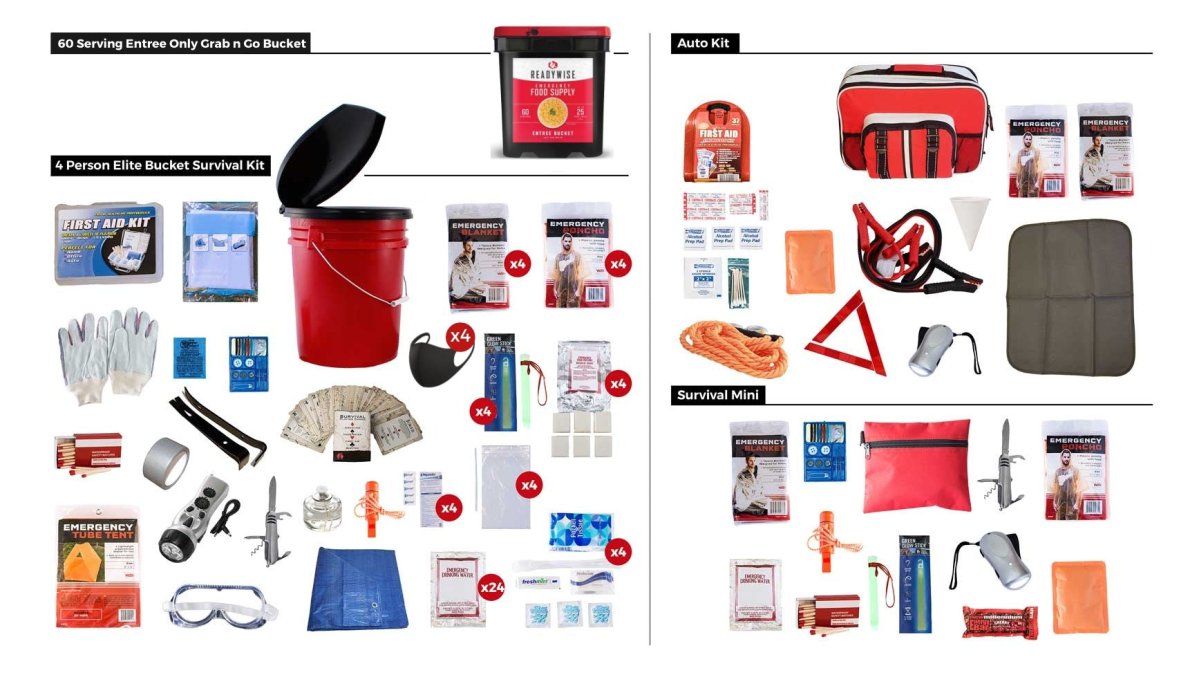
Selecting appropriate emergency foods requires balancing caloric density, shelf stability, palatability, and nutritional value. A practical emergency food checklist includes multiple food categories to ensure variety and nutritional completeness.
Selecting Shelf-Stable Foods with High Caloric Density
Start with high-calorie-density foods that don't require cooking or refrigeration. Energy bars, nut butters, dried fruits, and nuts provide substantial calories in compact packages. Canned meats like tuna, chicken, and salmon offer protein and calories without requiring fresh ingredients.

Planning for Food Rotation and Shelf Life
Emergency foods require rotation to maintain freshness and safety. Even shelf-stable foods have expiration dates. Rotating stock ensures you're using older supplies before they expire while replacing them with fresh inventory.
Water-to-Calorie Ratio and Storage Considerations
Water becomes critically important when planning emergency food supplies. Many shelf-stable foods require water for preparation. Additionally, your body needs water to digest food and maintain hydration during stress.
Frequently Asked Questions
How many calories per day does a person need in an emergency?
Most adults need roughly 1,600 to 3,000 calories daily during an emergency, depending on age, gender, body weight, and activity level. Sedentary adults typically require around 1,600–2,400 calories, while those performing strenuous activity may need 3,000 or more. Children and seniors have different baseline readiness requirements. Rather than applying one figure to everyone, calculate individual needs based on body weight (roughly 10–15 calories per pound for sedentary conditions) and adjust upward for physical demands or harsh climate exposure.
How do you calculate the amount of food needed for a survival kit?
Multiply your household's daily caloric requirement by the number of days you're preparing for. For example, a family of four needing 8,000 total calories daily requires 56,000 calories for a week-long emergency food supply. Choose shelf-stable foods with high calorie density to minimize storage space. Emergency food bars, such as the 400-calorie bars in our cases, provide dense calories in compact form. Verify shelf life and rotate stock regularly to maintain food security and nutritional quality.
What factors influence caloric needs during an emergency?
Age, gender, body weight, activity level, climate, and health status all affect caloric requirements. Strenuous activity—such as manual labor, rescue efforts, or outdoor exposure—can increase needs by 50–100%. Cold climates force the body to burn extra calories for warmth. Stress and anxiety also elevate metabolic demands. Individuals with certain health conditions or dietary restrictions may require adjusted macro-nutrient ratios. Account for these variables when planning your emergency food supply duration and selecting specific foods for your household inventory.
How do you account for children and seniors when calculating emergency food?
Children typically require fewer total calories than adults but more calories per pound of body weight. Seniors may need fewer calories overall but similar or higher protein intake for muscle maintenance. Use age-specific guidelines: children ages 4–8 need roughly 1,200–2,000 calories daily, while teenagers may need 1,800–3,200. Adults 60 and older often need 1,600–2,600 calories, depending on sex and activity. Rather than one quantity fitting all ages, calculate individual needs and sum them for your household total. Include foods suitable for any dental or digestive sensitivities within your family.


