


Last Updated: October 22, 2026
Quick Summary
The 5 P's of emergency preparedness are People, Prescriptions, Papers, Personal needs, and Priceless items. This household framework is a simple memory tool for the categories that matter most in a crisis, so you can act when there is no time to look anything up. Note that some organizations use a different five-P set focused on response phases.
- People come first, including every household member, pets, and service animals that depend on you.
- Originals of important documents belong in a fireproof, waterproof container, with copies in your go bag.
- Pick a review cadence such as the first weekend of each season to check expiration dates and batteries.
- Practice your plan twice a year, including one daytime and one nighttime drill.
- Hazard type changes the emphasis, not the framework: wildfire rewards Papers and Priceless items.
Table of Contents
- The 5 P's of Emergency Preparedness: What They Are and Why They Matter
- People and Pets: The First P in Your Emergency Preparedness Plan
- Prescriptions and Medical Needs: The Second P
- Papers and Important Documents: The Third P
- Personal Needs and Emergency Supplies: The Fourth P
- Priceless Items: The Fifth P
- Your Emergency Preparedness Plan Checklist: Turning the 5 P's Into Action
- Auto Emergency Kit: Extending the 5 P's to Your Vehicle
- Frequently Asked Questions
The 5 P's of Emergency Preparedness: What They Are and Why They Matter
The 5 P's of emergency preparedness are a simple memory framework for the categories that matter most in a crisis: People, Prescriptions, Papers, Personal needs, and Priceless items.
The framework forces a priority order. In a wildfire evacuation or fast-moving storm, you have minutes, not hours, decisions made calmly in advance replace panic in the moment.
One caution: not every organization defines the five P's the same way, some use a set focused on response phases rather than personal belongings.
Why Different Organizations Use Different Five-P Frameworks
There is no single official five-P list; agencies, nonprofits, and educators each built their own version.
Some organize around response phases: prevention, protection, mitigation, response, and recovery (FEMA’s five mission areas). Others focus on household priorities, which is where People, Prescriptions, Papers, Personal needs, and Priceless items come from. Both are legitimate; they answer different questions.
The practical takeaway: use the household version for your evacuation plan, and treat the phase-based version as background for understanding how agencies respond. For authoritative baseline guidance, the Ready.gov emergency preparedness resources outline the core steps most agencies build on.
People and Pets: The First P in Your Emergency Preparedness Plan
People come first, always. That means every member of your household, plus the pets and service animals that depend on you. No supply kit matters if you leave someone behind.
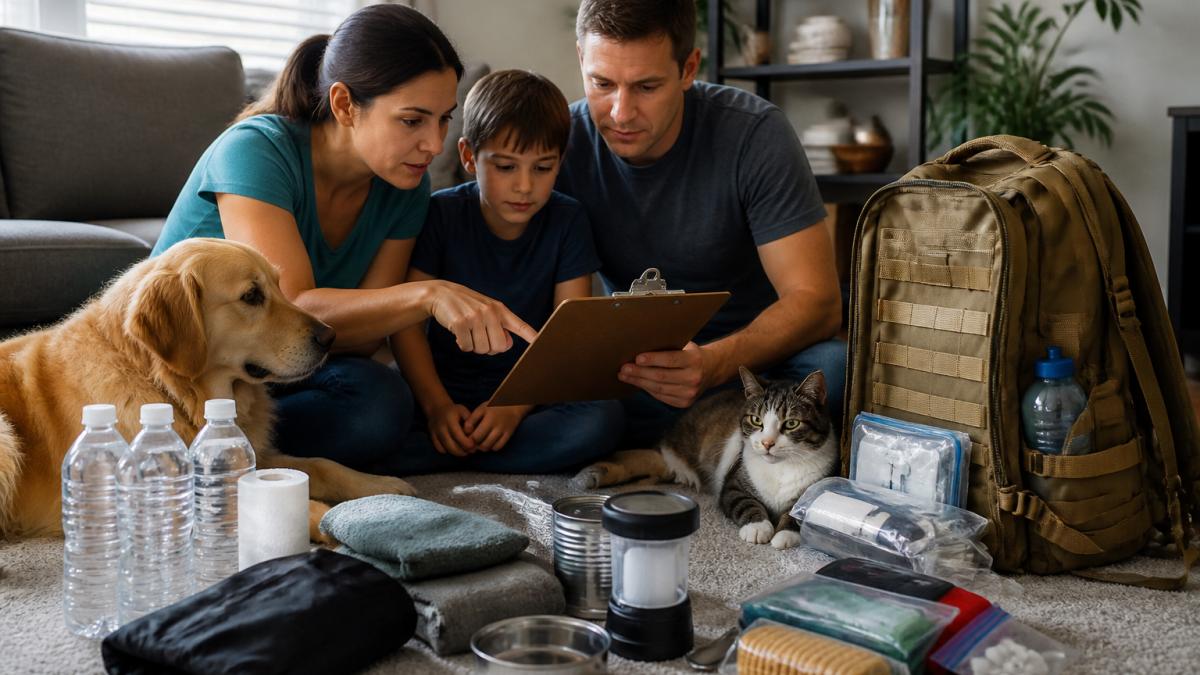
Write down who lives in your home and who might show up, older adults, young children, anyone with mobility limitations, neighbors who may need a check-in.
Building a Family Emergency Plan That Includes Everyone
A family emergency plan is a written document that names a meeting place, an out-of-area contact, and a communication method for each household member. Keep a printed copy in every bag.
Work through these steps:
- Pick two meeting spots: one near home, one outside the neighborhood.
- Choose an out-of-area contact everyone calls or texts if separated.
- Assign a buddy to each child and each person needing assistance.
- Store pet carriers, leashes, and food near the exit.
- Practice the plan twice a year, including a nighttime drill.
Accessibility and Household-Specific Planning
A plan that works for a healthy adult may fail a household with a wheelchair user, a person with dementia, a service animal, or limited English at home. Build around the people you actually have.
- Mobility and sensory needs. Note who uses a wheelchair, walker, cane, or hearing aids, and where those items are stored. Identify a stair-free exit route and confirm the meeting spot is reachable without a vehicle.
- Older adults and caregivers. For anyone receiving in-home care, write down the caregiver contact, the schedule, and what happens if that caregiver cannot reach the home. A neighbor check-in agreement covers the gap.
- Children. Give each child a card with the out-of-area contact and two meeting spots. Practice what to do if a parent is not home, and identify a trusted adult nearby.
Reunification: The Step Most Plans Skip
Meeting spots and an out-of-area contact only work if everyone knows how to use them. Decide in advance who picks up each child, who checks on the older adult, and where the household regroups if roads close. Note school and workplace release policies.
A common mistake is planning for adults only. Kids, pets, service animals, and anyone who can't drive or move quickly need their own line items and rehearsal.
Prescriptions and Medical Needs: The Second P
Prescriptions and medical needs cover the medications, devices, and health supplies your household relies on, the category people most often under-prepare, because it requires planning rather than shopping.
Keep an updated written list of every prescription, the prescriber, and the pharmacy, stored with your papers.
Beyond medications, think about what your household actually uses: eyeglasses, hearing aid batteries, mobility aids, and any medical equipment that needs power.
Papers and Important Documents: The Third P
Papers means the documents that prove who you are and what you own. Originals belong in a fireproof, waterproof container. Copies belong in your go bag.
The core set:
1 Person 72-Hour Necessity Survival Kit with First Aid →
- Identification: passports, driver's licenses, birth certificates
- Financial records: insurance policies, account numbers, deeds
- Medical records: prescription lists, immunization records, provider contacts
Digital Readiness and Document Backups
Digital readiness means storing encrypted copies of every important document somewhere you can reach from any device. Scan originals, save them to an encrypted cloud folder, and give one trusted person access. Test the backup from a phone on cellular data; if you can't retrieve a document in under two minutes, it isn't ready.
Personal Needs and Emergency Supplies: The Fourth P
Personal needs and emergency supplies are the everyday items that keep a household functioning: water, food, hygiene, lighting, and comfort. The right quantity depends on household size, ages, health, climate, and how long you expect to be on your own, no single number fits every home.
Build around these categories:
- Water and a way to purify more
- Food that needs no cooking, plus a manual can opener
- First aid supplies for minor injuries
How to Size Your Supplies Without Guessing
Instead of copying a generic list, estimate your household's actual consumption over a realistic window. Plan for several days of self-sufficiency, then extend the window for hazards your area faces, such as hurricanes, winter storms, or wildfire smoke.

Work through these factors:
- People. Count every household member, including children and older adults, whose needs differ from a healthy adult's.
- Water. Drinking, cooking, and basic hygiene all draw from the same supply. Households with pets, infants, or anyone who is ill need more. Store water in food-grade containers and rotate on a schedule.
- Food. Choose shelf-stable items your household will actually eat, and account for any dietary restrictions, allergies, or texture needs. A manual can opener matters more than a second case of canned goods.
Rotation and Maintenance
Supplies are only useful if they are current. Pick a review cadence, the first weekend of each season is common, and check expiration dates, battery levels, water containers, and anything borrowed and not returned.
For households that want a starting point rather than assembling everything piece by piece, a kit like our 1 Person 72-Hour Necessity Survival Kit with First Aid bundles food, water, purification tablets, first aid, lighting, and shelter items in one bag. Families often pair a per-person kit with a broader package such as our Family Preparedness Package w/ Food Storage.

The American Red Cross emergency kit guidance is a useful cross-check for what belongs in a basic kit, and Ready.gov build a kit guidance explains how to adapt a kit to your household.
Priceless Items: The Fifth P
Priceless items are the things insurance can't replace: photos, heirlooms, keepsakes, and irreplaceable records. They're last only because lives come first. Scan what can be scanned, photograph what can't, and store originals in one clearly labeled, grab-ready box.
Here's the honest trade-off: a large heirloom may not fit in a vehicle already loaded with people and pets. Decide now which few items you'd carry and accept the rest, far easier than making that call in a driveway at night.
Your Emergency Preparedness Plan Checklist: Turning the 5 P's Into Action
An emergency preparedness plan checklist turns the five categories into a repeatable review. Use this one at the start of each season.
- People: current household list, meeting spots, out-of-area contact
- Pets: carriers, food, records, and a buddy assigned
- Prescriptions: written list updated, pharmacist consulted, travel pouch packed
How to Adapt the 5 P's for Different Hazards
Hazard type changes the emphasis, not the framework. A wildfire evacuation rewards Papers and Priceless items, because you may never return to the house. A hurricane often means sheltering in place, pushing Personal needs and water to the front. A power outage makes lighting and backup power the priority, while a winter storm adds warmth and vehicle readiness. Same five categories, different weighting, write the hazard you're most likely to face at the top of your checklist and adjust quantities accordingly.
Auto Emergency Kit: Extending the 5 P's to Your Vehicle
An auto emergency kit applies the same five categories to the hours you spend away from home. Your car is a second location and deserves its own version of the plan.
- People: a printed contact list and a phone charger
- Prescriptions: a written medication list, and bring daily doses with you rather than storing them in the car, since heat in a parked vehicle can damage many medicines
- Papers: copies of registration and insurance
Our Hurricane Emergency Kit is available in a backpack version for storm season, vehicles, and evacuation, and a compact First Aid Kit, 131 Pieces, Large covers the minor-injury layer. Add a USB Rechargeable LED Flashlight and a Tactical Hydration Pack with 3L Water Bladder if you travel with passengers. The National Weather Service severe weather safety guidance is worth reviewing before storm season, and FEMA's preparedness planning resources cover the wider household picture.

Most households put off preparedness because the list feels endless. The 5 P's of emergency preparedness fix that by shrinking it to five categories you can actually remember and review. Already Survival stocks survival kits, first aid supplies, lighting, water storage, and go-bag gear selected for practical use.
Frequently Asked Questions
What are the 5 P's of emergency preparedness?
The 5 P's are People and pets, Prescriptions and medical needs, Papers and important documents, Personal needs and supplies, and Priceless items. Each P covers a category of planning that helps households prepare for evacuation or sheltering in place. Some organizations use different five-P frameworks, so confirm which version your local emergency management office references. The core idea is the same: account for the humans and animals in your care, the medical items you rely on, the records you cannot easily replace, the supplies you need day to day, and the irreplaceable belongings worth protecting.
How does a family emergency plan fit into the 5 P's?
A family emergency plan is where the first P, People and pets, becomes concrete. It should list every household member, including children, older adults, and anyone with access or mobility needs, plus pets and their supplies. Include a meeting place, an out-of-area contact, and a communication method in case phone networks are overloaded. Review the plan with everyone in the household and practice it at least twice a year. Keep a printed copy in your emergency kit checklist so it is available if power or internet access is lost.
How often should I review my emergency kit checklist and plan?
Review your emergency kit checklist and family emergency plan at least once a year, and again whenever your household changes, such as a new baby, a new pet, a move, or a change in medical needs. Check expiration dates on food, water, and medications, and replace items as needed. Test flashlights, radios, and other battery-powered gear. A simple routine is to review everything when you change your clocks for daylight saving time. Regular review keeps your supplies current and your plan familiar to everyone.
What should go in an auto emergency kit as part of the 5 P's?
An auto emergency kit extends the 5 P's to your vehicle. Include water and shelf-stable food, a first aid kit, a flashlight, extra batteries, a blanket, and a poncho for warmth and shelter. Add a phone charger, a printed contact list, and copies of important documents in a waterproof bag. For the People P, include items for pets if they travel with you. Check the kit each season and replace expired food and water. Keep medications with you rather than in the car, since heat in a parked vehicle can damage them. Store it in the trunk or cargo area where it is easy to reach.
How do I adapt the 5 P's for different hazards?
Adapt the 5 P's to the hazard most likely in your area. For hurricanes, emphasize evacuation routes, waterproof document storage, and extra water. For wildfires, prioritize a quick-exit plan and a go bag with prescriptions and papers. For winter storms, add warmth, blankets, and a way to stay informed during power outages. For earthquakes, secure heavy furniture and keep sturdy shoes near your bed. The five categories stay the same, but the specific items and actions shift with the threat. Local emergency management guidance is the best source for hazard-specific recommendations.


