


Table of Contents
- What an Auto Emergency Kit Should Contain
- Prebuilt Car Emergency Kit Review
- Winter Car Emergency Kit Essentials
- Building a DIY Car Emergency Kit
- Car Emergency Kit Checklist and Maintenance
- Frequently Asked Questions
Last Updated: October 17, 2026
What an Auto Emergency Kit Should Contain
An auto emergency kit is a collection of essential supplies kept in your vehicle to handle roadside breakdowns, accidents, and unexpected delays.
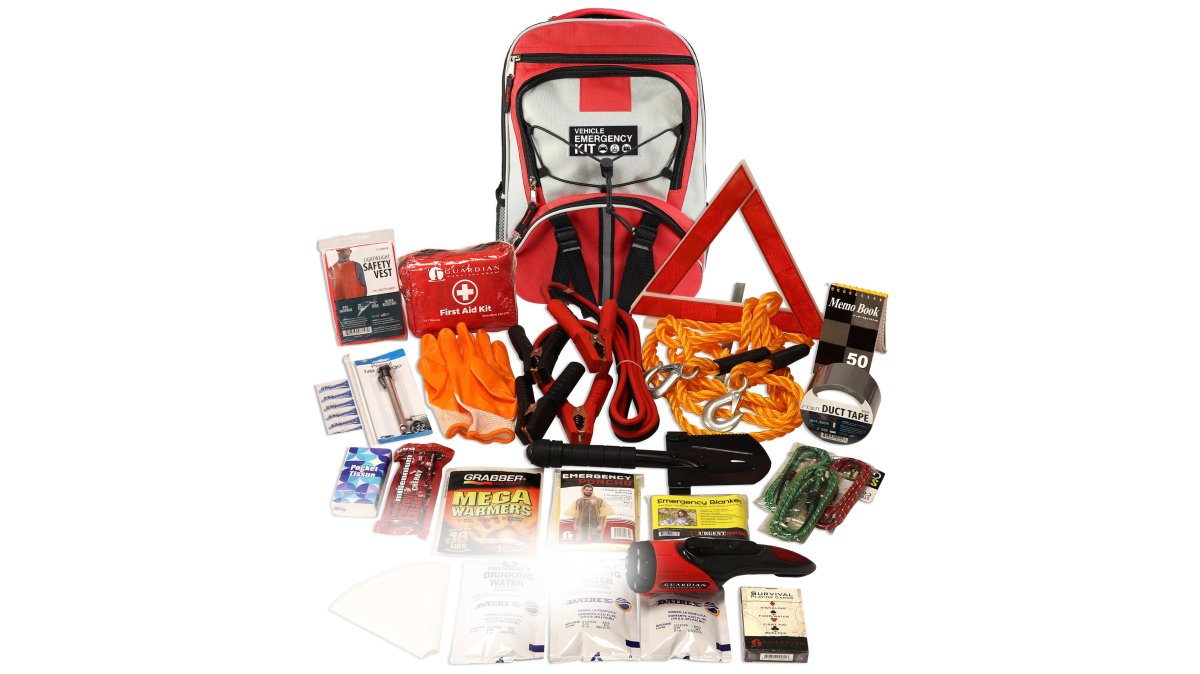
Most people underestimate what they might need.

The core categories every car emergency kit should include are first aid supplies, tools for basic repairs, visibility and communication equipment, and provisions for food and warmth.
First Aid and Medical Supplies
Roadside emergencies often involve minor cuts, scrapes, or impacts. A dedicated first aid section helps you handle these without waiting for professional help.
Your auto emergency kit needs bandages in multiple sizes, antiseptic wipes or pads, gauze for larger wounds, and adhesive tape.
The Auto First Aid Kit, 104 Pieces from Already Survival includes trauma pads, sterile gauze, antiseptic towelettes, multiple bandage sizes, pain relievers, and exam-quality gloves. This softsided kit fits easily in a vehicle and provides supplies for everything from minor scrapes to more serious cuts.
For medical emergencies beyond first aid, your priority is calling 911 and staying calm. First aid supplies are for stabilization and minor treatment only.
Tools and Equipment for Common Breakdowns
When your vehicle stops, you need tools to diagnose the problem or make temporary repairs. Jumper cables address dead batteries, a tire repair kit handles punctures, a basic wrench set covers many mechanical issues, and a flashlight with backup batteries lets you see after dark.
A folding shovel frees a stuck vehicle, clears debris, or creates traction in snow. A multipurpose tool handles cutting and adjusting tasks, and duct tape and zip ties are temporary fixes for countless problems.
The AAA Severe Weather Road Kit includes a folding shovel, heavy-duty flashlight with batteries, and emergency whistle. These tools address the most common roadside scenarios without overwhelming your trunk space.
Visibility and Communication Gear
When your vehicle breaks down on a roadway, other drivers need to see you immediately. Reflective triangles or flares create a visible warning zone. An emergency whistle attracts attention if you're stranded away from traffic.
A charged phone is your primary communication tool, and a portable phone charger ensures you can call for help even with a low battery. In areas with poor cell coverage, visibility markers matter even more.
The AAA Severe Weather Road Kit includes an emergency whistle and a flashlight with batteries. Add reflective triangles or other suitable roadside warning devices, as these are not listed among its contents.
Food, Water, and Warmth
Extended delays or being stuck overnight require provisions. Water is the priority, your body needs hydration regardless of temperature or activity level. Emergency food bars provide calories if you're waiting hours for assistance.
A survival blanket weighs almost nothing but provides critical warmth retention. Hand warmers activate chemically and last hours, and a fleece set or insulated clothing layers address cold-weather emergencies.
The Comfort option of the Emergency Auto Kit from Already Survival includes a 2,400-calorie food bar, six 4-ounce water pouches, and a hydration kit with water purification tablets. The food and water have a five-year shelf life when stored according to their labeled instructions. These are supplemental emergency reserves; add drinking water and food for every passenger.
Prebuilt Car Emergency Kit Review
Prebuilt kits save time and ensure you don't overlook essentials. Each kit below addresses different scenarios and vehicle types, described by what each is designed for so you can match your needs to the right option.
Emergency Auto Kit
The Comfort option of the Emergency Auto Kit from Already Survival combines a 2,400-calorie food bar, six 4-ounce water pouches, water purification tablets, roadside tools, and first aid supplies. Essential and Necessity options have different contents, so review your selected tier before ordering.

The Comfort option offers a broad starting point for roadside preparedness. Add extra drinking water, food, medications, and weather-appropriate clothing for your passengers and travel conditions.
The kit's all-in-one approach appeals to people who prefer not to assemble components themselves, offering essential coverage for everyday preparedness.
AAA Severe Weather Road Kit - 65 Pieces
The AAA Severe Weather Road Kit includes 65 items in a durable carry bag: a heavy-duty flashlight with batteries, folding shovel, survival blanket, fleece set with cap and gloves, hand warmers, candles, waterproof matches, emergency whistle, and a first aid section with bandages, gauze, antiseptic towelettes, and adhesive tape.
This kit emphasizes visibility, warmth, and light, critical for winter driving or emergencies in poor conditions, and includes an emergency car care guide for reference.
The 65-piece count reflects variety rather than redundancy: multiple light sources give you options depending on your situation, and the fleece set addresses cold-weather exposure directly, making this kit particularly suitable for regions with harsh winters.
LifeLine AAA Road Trip Kit for Vehicles with Compact Storage Case
The LifeLine AAA Road Trip Kit stores in a compact EVA case designed for easy trunk storage. It includes commonly used supplies and accessories suitable for travel, outdoor activities, and everyday use, prioritizing portability and organization without taking up significant vehicle space.
This kit works well for frequent road trippers who want supplies organized and accessible. The EVA case keeps items from scattering across your trunk and makes the kit easy to grab if you step out of your vehicle.
The Road Trip Kit balances breadth of supplies with storage efficiency, designed for vehicles with limited trunk space or where you want emergency supplies organized separately from other cargo.
LifeLine AAA Commuter Kit - AAA Kit for Vehicles
The LifeLine AAA Commuter Kit is designed for daily commuting and general preparedness. It stores in a compact EVA case with bandages, wipes, basic tools, and commonly used items, fitting in a trunk, glove compartment, or backpack for convenient access.
This kit suits daily commuters who want a lightweight, portable solution. The compact size keeps it accessible without dedicating significant vehicle space, appropriate for urban and suburban commuting where minor issues are more common than major breakdowns.
The Commuter Kit assumes shorter emergency durations and focuses on first aid and basic tools rather than extended survival provisions, a practical choice for routine driving rather than long-distance travel.
Auto First Aid Kit, 104 Pieces, Softsided
The Auto First Aid Kit, 104 Pieces is a dedicated first aid solution with no tools or survival supplies.
This kit works well as a standalone first aid resource or as a supplement to a broader emergency kit. The softsided design fits conveniently in any vehicle, and the 104 pieces provide substantial coverage from minor scrapes to more serious wounds.
The dedicated first aid focus means this kit excels at medical preparedness but doesn't address mechanical breakdowns, visibility, or survival needs, ideal for people who already have tools and supplies but want comprehensive first aid coverage.
Kit |
Best For |
Emphasis |
Storage |
|---|---|---|---|
Emergency Auto Kit |
Extended delays and survival scenarios |
Food, water, tools, first aid |
Standard vehicle trunk |
AAA Severe Weather Road Kit |
Cold weather and poor visibility |
Warmth, light, visibility, first aid |
Carry bag included |
LifeLine Road Trip Kit |
Frequent road trips with organized storage |
Portability and organization |
Compact EVA case |
LifeLine Commuter Kit |
Daily commuting and quick access |
Lightweight and accessible |
Compact EVA case |
Auto First Aid Kit, 104 Pieces |
Dedicated medical preparedness |
Comprehensive first aid coverage |
Softsided, compact |
Winter Car Emergency Kit Essentials
Winter driving introduces specific hazards that summer kits don't address. Snow and ice affect traction and visibility. Cold exposure becomes a serious risk if you're stranded.
Heavy-duty ice scrapers and snow brushes clear visibility.
Insulated clothing, blankets, and hand warmers address cold exposure. A hat and gloves take minimal space but prevent heat loss.
The AAA Severe Weather Road Kit includes a folding shovel, survival blanket, fleece set with cap and gloves, and hand warmers, addressing the core winter survival needs.

Some people keep summer and winter kits separate, swapping them seasonally; others maintain a year-round kit and add winter items when cold weather arrives.
Building a DIY Car Emergency Kit
Assembling your own DIY car emergency kit gives you control over what goes in your vehicle, tailored to your specific vehicle, driving patterns, and climate.
Start with the core categories: first aid, tools, visibility, and provisions.
Store everything in a durable bag or container that fits in your trunk without interfering with cargo.
Review your kit annually. Replace expired items, check that batteries still work, and update contents if your vehicle or driving patterns change, since an unchecked kit may have dead batteries or missing items when you actually need it.
Car Emergency Kit Checklist and Maintenance
A car emergency kit checklist helps you build a complete kit and maintain it over time. This checklist covers the essentials; adjust items based on your vehicle, climate, and driving patterns.
First Aid Supplies:
- Bandages in multiple sizes
- Antiseptic wipes and pads
- Gauze dressing pads
- Adhesive tape
- Pain relievers
- Antihistamines
- Non-latex gloves
- First aid guide or instruction card
Tools and Equipment:
- Jumper cables
- Flashlight with backup batteries
- Basic wrench set
- Multipurpose tool or knife
- Tire repair kit or plug kit
- Duct tape and zip ties
- Folding shovel (winter regions)
Visibility and Communication:
- Reflective triangles or flares
- Emergency whistle
- Portable phone charger
- Cell phone (if possible, a dedicated emergency phone)
Food, Water, and Warmth:
- Drinking water (quantity depends on climate and trip length)
- Emergency food bars
- Survival blanket or emergency blanket
- Hand warmers (winter)
- Extra clothing or fleece layer
- Hat and gloves (winter)
Maintenance Schedule:
Check your kit every six months.
After using any item during an actual emergency, replace it immediately rather than waiting for the next scheduled maintenance. Replace used supplies promptly so your kit remains ready for the next emergency.
Roadside emergencies test your preparation. An auto emergency kit turns a stressful breakdown into a manageable situation.
Already Survival offers multiple kits for different scenarios and vehicle types.
Start with a kit that matches your primary driving situation. Add items for secondary scenarios as your preparedness grows. Review and maintain your kit regularly so it's ready when you need it.
Frequently Asked Questions
What should be in an auto emergency kit?
An auto emergency kit should include first aid supplies (bandages, gauze, antiseptic wipes), tools for common repairs (jumper cables, flashlight with batteries), visibility items (reflective triangles, emergency whistle), and survival essentials (blanket, water, emergency food). The specific contents depend on your climate, driving habits, and how far you typically travel from populated areas. A comprehensive auto emergency kit prepares you for breakdowns, accidents, and unexpected delays.
Should I buy a prebuilt car emergency kit or make my own?
Prebuilt car emergency kits offer a convenient, organized starting point. Check the contents and add supplies for your passengers, vehicle, and climate. They're ideal if you want immediate readiness. A DIY car emergency kit lets you customize contents to match your vehicle type, local climate, and personal needs. Many people combine both approaches: start with a prebuilt kit, then add or adjust items based on their specific situation. The best choice depends on your comfort level with preparation and how much customization matters to you.
What is something often forgotten to put in a car emergency kit?
Many people overlook non-latex gloves, which protect both you and others during first aid situations. Also commonly forgotten: jumper cables or battery assistance equipment, a phone charger or portable power bank, and items for weather protection like an ice scraper or cat litter (for traction on ice). Emergency food and water are also underestimated—people often assume they'll reach help quickly, but roadside delays can last hours. A thorough car emergency kit checklist helps prevent these gaps.
How often should I inspect and replenish my auto emergency kit?
Inspect your auto emergency kit every six months and after any emergency use. Check that batteries still work, food and water haven't expired, and no items are damaged or missing. Seasonal changes matter too: add extra warmth items before winter and ensure your kit handles summer heat. If you use any supplies, replace them immediately. Regular maintenance ensures your auto emergency kit remains effective when you actually need it.


