


Table of Contents
- Quick Comparison: Emergency Food Supply Kits for Families
- How We Chose These Emergency Food Kits
- 1. Family Preparedness Package w/ Food Storage: Best Overall for Four People
- 2. 4 Person Comfort Survival Kit: Most Complete for Families of Four
- 3. 4 Person Essential Survival Kit: Best Mid-Range Four-Person Option
- 4. 4 Person Necessity Survival Kit: Most Affordable Four-Person Kit
- 5. 3 Person Comfort Survival Kit: Best for Families of Three
- 6. 3 Person Essential Survival Kit: Best Value Three-Person Kit
- Emergency Food Supply Checklist: What Every Family Kit Should Include
- Frequently Asked Questions
Last Updated: September 17, 2026
Quick Comparison: Emergency Food Supply Kits for Families
Choosing an emergency food and survival kit for a family means considering household size, food and water supplies, shelf life, portability, and the additional emergency gear included. This guide compares several Already Survival options designed for households of different sizes and preparedness needs, so you can see what's included and choose the setup that fits your family.
Kit |
People |
Food Bars |
Water Pouches |
Good Fit For |
Kit |
|---|---|---|---|---|---|
Family Preparedness Package |
4 |
24 + 56 food servings |
24 |
Multi-location preparedness |
Family Preparedness Package |
4 Person Comfort Kit |
4 |
36 |
48 |
Expanded four-person gear |
4 Person Comfort Kit |
4 Person Essential Kit |
4 |
36 |
48 |
Four-person essentials |
4 Person Essential Kit |
4 Person Necessity Kit |
4 |
36 |
24 |
Basic four-person preparedness |
4 Person Necessity Kit |
3 Person Comfort Kit |
3 |
27 |
36 |
Expanded three-person gear |
3 Person Comfort Kit |
3 Person Essential Kit |
3 |
27 |
36 |
Three-person essentials |
3 Person Essential Kit |
How We Chose These Emergency Food Kits
Every kit in this guide was compared using the same practical factors: available food and water, shelf life, included emergency supplies, and the number of people the kit is designed to support. A common mistake is assuming that a kit designed for one person will provide adequate supplies for an entire household. The Ready.gov emergency supply guidelines recommend keeping several days of food, water, and other emergency supplies on hand, so household size should be considered when choosing or building an emergency kit.

What Matters Most When Comparing Kits
The amount of food included is one important factor when comparing emergency kits, but it should be considered along with water, household size, dietary needs, and the other supplies included. For example, 36 food bars at 400 calories each provide 14,400 total calories. Reviewing the actual contents and nutrition labels helps you determine how a kit fits into your family's overall emergency food plan.
1. Family Preparedness Package w/ Food Storage: Best Overall for Four People
The Family Preparedness Package is designed for a household of four and combines supplies that can be used across multiple locations. It includes a 4 Person Elite Bucket Survival Kit along with an Auto Kit and a Survival Mini, providing options for keeping emergency supplies at home, in a vehicle, or in another

What's included:
- 24 water pouches and 24 food bars (9,600 calories)
- 40 water purification tablets and 4 hydration bags
- Deluxe first aid kit, hygiene kits, and sanitation supplies
- Emergency radio flashlight, tube tent, tarpaulin, and tools
2. 4 Person Comfort Survival Kit: Most Complete for Families of Four
The 4 Person Comfort Survival Kit includes additional shelter and first aid supplies for a household of four. It contains 48 water pouches, 36 food bars, a Deluxe First Aid Kit with bandages and gauze supplies, and four emergency sleeping bags.
3. 4 Person Essential Survival Kit: Best Mid-Range Four-Person Option
The 4 Person Essential Survival Kit provides food, water, and emergency supplies for a household of four without some of the additional comfort items found in the Comfort Kit. It includes 48 water pouches and 36 food bars, providing the same food and water quantities listed for the 4 Person Comfort Kit.
4. 4 Person Necessity Survival Kit: Most Affordable Four-Person Kit
The 4 Person Necessity Survival Kit provides a more streamlined selection of emergency supplies for a household of four. It includes 24 water pouches, 36 food bars, 40 water purification tablets, and four hydration bags.
5. 3 Person Comfort Survival Kit: Best for Families of Three
The 3 Person Comfort Survival Kit provides a similar selection of emergency supplies for a smaller household. It includes 36 water pouches, 27 food bars, three emergency sleeping bags, and two 2-person tube tents.
6. 3 Person Essential Survival Kit: Best Value Three-Person Kit
The 3 Person Essential Survival Kit provides food, water, and emergency supplies for a household of three. It includes 36 water pouches, 27 food bars, and 30 water purification tablets, along with additional emergency supplies for basic preparedness.
Emergency Food Supply Checklist: What Every Family Kit Should Include
A family emergency food supply checklist should cover water, calories, first aid, shelter, light, and sanitation, with enough of each for every person in the household. Use this list to audit any kit before you buy it, or to fill gaps in what you already own. The items below are ordered by what fails first in a real outage, water and calories before comfort items.
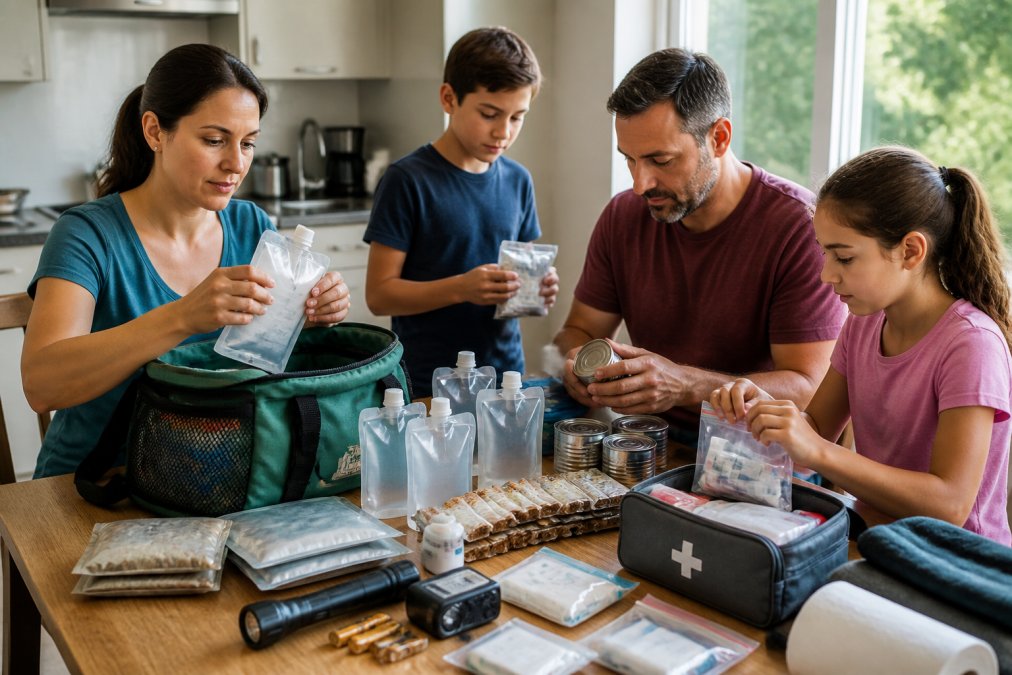
Water (the item most kits under-deliver)
- At least 1 gallon per person per day for drinking and basic hygiene, or pouches plus purification tablets as a bridge
- A separate water storage container to refill from, pouches alone rarely cover a full 72 hours for a family
- Purification tablets or a filter, with the count checked against the number of people and days
- A written water-to-food ratio for your household (see the math below)
Calories Plan emergency food quantities around each household member’s needs, considering age, activity level, dietary requirements, and how long you are preparing for.
- Food bars or freeze-dried meals with a 5-year or longer shelf life
- At least one freeze-dried component if you want coverage beyond 72 hours
- A calorie tally written on the kit so you know at a glance how many days it actually covers
Dietary and allergen audit
- Check every label for wheat/gluten, dairy, soy, and nuts
- Confirm a safe option exists for each family member with a restriction
- Note sodium content if anyone is on a low-sodium diet
- Pack a small separate stash of allergen-safe bars so one person's needs don't drive the whole kit
First aid
- Bandages, gauze, tape, and antiseptic pads sized to the household
- Any prescription medications, with a rotation date noted
Shelter and warmth
- Emergency blankets, ponchos, or sleeping bags, one per person
- Tube tents or a tarp if you may need to sleep outside the home
Light and communication
- A flashlight or emergency radio with a reliable power source, such as replaceable batteries, rechargeable power, hand-crank, or solar charging.
- Backup batteries for anything that does
Sanitation and hygiene
- Soap, toothbrush, wet wipes, toilet bags
- Face masks and work gloves
- Waterproof matches or a flint starter
Storage and rotation
- A cool, dark, easy-to-reach location inside the conditioned part of the home
- A sealed tote to keep out moisture and pests
- A reminder to inspect your supplies at least twice a year and replace items as they approach their expiration or recommended replacement dates.
- A log taped inside the lid: purchase date, expiration date, last checked
The Water-to-Food Ratio, Worked Out
Most guides tell you to store water and food but never connect the two. Here is the connection for a family of four over 72 hours:
- Drinking water: 1 gallon per person per day × 4 people × 3 days = 12 gallons
- Food bars: 36 bars × 400 calories = 14,400 calories, or 3,600 per person, about three days at survival intake
- Freeze-dried meals: Freeze-dried meals: Check the preparation instructions for each product to determine how much additional water is needed for rehydration, and include that amount in your emergency water plan.
Frequently Asked Questions
What are the best emergency food kits for families?
The right emergency food and survival kit depends on your household size, storage needs, and the types of supplies you want included. Families can compare options such as the Family Preparedness Package, 4 Person Comfort and Essential kits, and smaller 2- or 3-person kits. Look at the food, water, first aid, shelter, and other emergency supplies included with each kit to determine which option fits your household.
How many calories per person per day should an emergency kit provide?
Emergency food needs vary by person based on factors such as age, activity level, health, dietary needs, and the length of the emergency. When evaluating a kit, check the total calories provided and divide them by the number of people and days the kit is intended to support. Consider adding additional calorie-dense foods based on your household’s individual needs.
What is the average shelf life of freeze-dried emergency food?
Shelf life varies by product, packaging, manufacturer, and storage conditions. Some freeze-dried emergency foods are rated for long-term storage of up to 25 years when unopened and stored according to the manufacturer’s instructions. Always check the shelf-life information on the specific product and store emergency food in a cool, dry location away from direct sunlight.
What should I include in my family emergency food supply checklist?
A family emergency food supply checklist should include enough food and water for each household member, along with any supplies needed to safely prepare and use them. Consider water purification supplies, a manual can opener if you store canned foods, first aid supplies, and foods that meet your family’s dietary needs. Check expiration dates regularly and adjust quantities based on your household size and the length of time you are preparing for.
Are freeze-dried meals better than canned goods for long-term storage?
Freeze-dried meals and canned foods can both play a useful role in emergency food storage. Many freeze-dried products are designed for long-term storage and are lightweight, but they usually require water for preparation. Canned foods are ready to eat or require little preparation, but they are heavier and shelf life varies by product. Check manufacturer dates and storage instructions for either option, and consider keeping a mix that works for your household.
Preparing ahead can make it easier to manage a power outage, severe weather event, or other emergency. Start with enough food and water for your household, then consider first aid, lighting, shelter, sanitation, and other supplies that fit your situation. Already Survival offers emergency food and survival kits for different household sizes, along with individual preparedness supplies that can help you build or expand your emergency plan.


