


Table of Contents
- What Belongs in a First Aid Kit for Bug Out Bags
- Wound Care and Bandages: The Foundation of First Aid Supplies
- Trauma Kit Essentials for Serious Injuries
- Over-the-Counter Medications for Survival Kits
- First Aid Kit Maintenance Schedule and Storage
- Pre-Built First Aid Kits vs. Custom Bags: Comparison and Pricing
- Specialized Kits for Families, Outdoor Activities, and Water Emergencies
- Frequently Asked Questions
Last Updated: September 19, 2026
What Belongs in a First Aid Kit for Bug Out Bags
A bug out bag demands a first aid kit that prioritizes critical supplies while staying compact and lightweight.

Essential first aid supplies for bug out bags should focus on wound management, infection prevention, pain relief, and trauma control, the items that matter most when professional help isn't available.
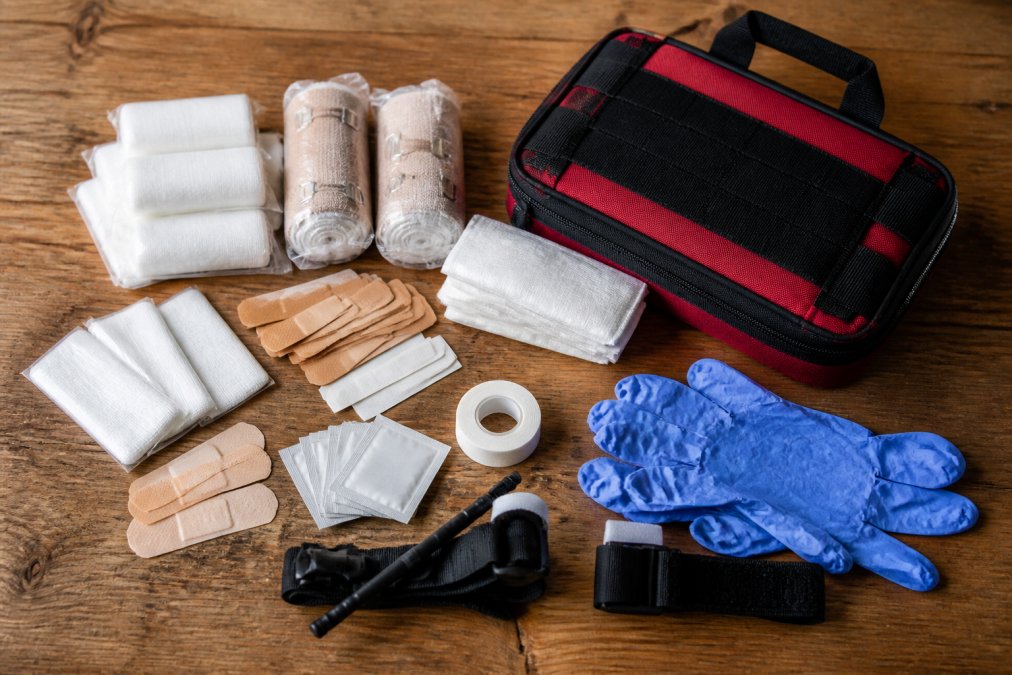
The foundation of any effective bug out bag includes wound care supplies, trauma management tools, medications, and protective equipment.
Wound Care and Bandages: The Foundation of First Aid Supplies
Wound care forms the backbone of essential first aid supplies for bug out bags. The goal is stopping bleeding, preventing infection, and protecting wounds from contamination.

Gauze rolls absorb blood and allow air circulation. Adhesive bandages work for minor cuts but take disproportionate space, include a few but prioritize sterile gauze pads. Compression bandages secure dressings and apply pressure to control bleeding.
Antiseptic wipes can be useful for cleaning intact skin around minor injuries, while antibiotic ointments may be appropriate for some minor cuts and scrapes when used according to their product directions. Check labels for allergies, warnings, and proper use before adding these products to your kit.
Medical tape holds dressings in place. Butterfly closures work for small lacerations. Tincture of benzoin improves tape adhesion in wet conditions.
Trauma Kit Essentials for Serious Injuries
Trauma supplies are intended for serious, potentially life-threatening injuries. Having appropriate supplies can be valuable, but knowing how and when to use them is equally important. Hands-on bleeding-control and first aid training can help you use emergency equipment more safely and effectively.
Training as a Foundation
Consider completing a Stop the Bleed or other recognized bleeding-control course before relying on trauma supplies in an emergency. Hands-on training can help you learn how to recognize life-threatening bleeding and use bleeding-control equipment appropriately.
If hands-on training is not immediately available, educational materials from recognized organizations such as the American Red Cross can provide useful background information. Whenever possible, follow up with hands-on first aid or bleeding-control training.
Tourniquets: Selection and Application
Tourniquets are commonly included in trauma kits for controlling life-threatening bleeding from an arm or leg. If you choose to carry one, select a commercially manufactured tourniquet from a reputable source and learn how to use it through recognized first aid or bleeding-control training.
When selecting a tourniquet, choose a commercially manufactured product from a reputable source and review the manufacturer’s instructions. Training can help you understand the differences between tourniquet designs and how to use the equipment appropriately.
Application Protocol
Tourniquets are intended for life-threatening bleeding from an arm or leg. Improper use can cause harm, so follow the instructions provided with the device and the techniques taught in a recognized first aid or bleeding-control course. In an emergency, contact emergency medical services as soon as possible.
Hemorrhage Control Beyond Tourniquets
Trauma shears can help provide access to an injury by safely cutting through clothing and other materials. Sterile gauze and pressure dressings are also commonly included in trauma kits for managing serious bleeding.
Hemostatic gauze is another specialized bleeding-control product that may be included in some trauma kits. Because proper use depends on the injury and the specific product, follow the manufacturer’s instructions and techniques taught in recognized first aid or bleeding-control training.
Pressure Dressings and Wound Packing
Pressure dressings are designed to help maintain pressure over a serious bleeding injury and are commonly included in trauma kits. Some emergency kits also contain specialized products such as hemostatic gauze.
Wound packing is a bleeding-control technique that requires proper knowledge and training. If you carry supplies intended for wound packing, learn their correct use through a recognized first aid or bleeding-control course and follow the manufacturer’s instructions.
Elastic Bandages and Securing Trauma Dressings
Elastic bandages are versatile additions to a first aid kit and may be used to support minor sprains or help secure dressings when appropriate. Consider including one or more sizes based on the number of people your emergency kit is intended to support.
Outdoor Survival Gear and First Aid Kit →
Trauma Kit Assembly by Scenario
The contents of a trauma kit should reflect the number of people it may need to support, the activities involved, and the user’s level of training. Common trauma-kit supplies may include commercially manufactured tourniquets, trauma shears, sterile gauze, pressure dressings, hemostatic gauze, emergency blankets, and CPR barriers. Choose supplies you understand how to use and consider additional quantities when preparing for multiple people.
Over-the-Counter Medications for Survival Kits
Over-the-counter medications take minimal space but provide significant relief during extended emergencies. Match your selection to your household's actual medical history and risk profile.
Core Pain and Fever Management
Common over-the-counter supplies may include medications for pain or fever, but the appropriate choices can vary by age, health conditions, allergies, other medications, and individual needs. Follow product labels and consult a healthcare professional or pharmacist if you are unsure which medications are appropriate for members of your household.
Allergy and Gastrointestinal Relief
Depending on your household’s needs, you may consider over-the-counter products for allergies, heartburn, or gastrointestinal discomfort. People with known severe allergies should follow the emergency treatment plan provided by their healthcare professional and keep prescribed emergency medication accessible.
When selecting any over-the-counter medication, review its label for proper use, warnings, age restrictions, interactions, and storage requirements. Consult a healthcare professional or pharmacist if you have questions about what is appropriate for your household.
Respiratory and Cough Management
Depending on individual needs, a first aid kit may include over-the-counter products for common respiratory or cough symptoms. Check product labels for age restrictions, health warnings, possible medication interactions, and storage requirements, and consult a healthcare professional or pharmacist when appropriate.
Pediatric and Geriatric Considerations
Children and older adults may have different medication and first aid needs than other household members. When preparing supplies for them, consider age, weight, existing health conditions, allergies, and medications already being taken.
For medications, follow current product labeling and guidance from a healthcare professional or pharmacist. Keep important medical information and emergency contacts with the kit when appropriate.
Customization by Risk Profile
Customize your first aid supplies around the actual needs of the people who may use the kit. Consider known allergies, existing medical conditions, regular medications, planned activities, and the environments where the kit is most likely to be used.
Storage and Rotation
First Aid Kit Maintenance Schedule and Storage
Check your kit twice yearly (spring and fall). Verify adhesive bandages stick, antiseptic wipes haven't dried out, and medications haven't expired. Replace anything questionable.
Pre-Built First Aid Kits vs. Custom Bags: Comparison and Pricing
Kit Type |
Best For |
Customization |
Time Investment |
Kit Type |
|---|---|---|---|---|
Pre-built compact kits |
Travel and basic preparedness |
Limited |
Minimal |
Pre-built compact kits |
Pre-built comprehensive kits |
Families and outdoor groups |
Moderate |
Minimal |
Pre-built comprehensive kits |
Custom assembled kits |
Specific needs and scenarios |
High |
More time required |
Custom assembled kits |
Storage bags only |
Organizing supplies you already own |
Full |
Assembly required |
Storage bags only |
Pre-built kits offer a convenient way to organize emergency medical supplies without assembling everything individually. Already Survival carries compact first aid kits designed for travel and outdoor use, as well as larger multi-piece survival and first aid kits with additional supplies and storage compartments. Compare the contents, size, and intended use of each kit to determine which option fits your preparedness needs.

Specialized Kits for Families, Outdoor Activities, and Water Emergencies
Different scenarios demand different supplies. A family with young children needs pediatric-appropriate items. Outdoor hikers face different injury risks than road travelers. Water-based activities require waterproof protection.
Frequently Asked Questions
What are the most essential first aid supplies for a bug out bag?
A bug out bag first aid kit may include adhesive bandages, sterile gauze, medical tape, antiseptic supplies, nitrile gloves, trauma shears, tweezers, and other supplies appropriate for the people and activities involved. Specialized bleeding-control equipment may also be considered when paired with appropriate training. Choose supplies based on your household’s needs, and periodically inspect the kit for used, damaged, or expired items.
How often should you follow a first aid kit maintenance schedule?
Check your first aid kit every six months for expiration dates on medications, antiseptic wipes, and ointments. Replace any items that have been used or damaged. After using supplies during an actual emergency, restock immediately. Store kits in a cool, dry place away from direct sunlight to extend shelf life. Seasonal checks before outdoor activities or before severe weather seasons help catch expired items before you need them.
Which over-the-counter medications for survival kits should I include?
The appropriate over-the-counter medications for an emergency kit depend on the people who may use them. Common categories may include products for pain or fever, allergies, gastrointestinal discomfort, and minor skin irritation. Review product labels for age restrictions, allergies, interactions, storage requirements, and expiration dates. If you are unsure which medications are appropriate for your household, consult a healthcare professional or pharmacist.
Should I buy a pre-built first aid kit or assemble my own bug out bag?
Pre-built first aid kits offer convenience and organized supplies, while custom kits give you more control over the contents. Many people start with a pre-built kit and then add supplies based on household needs, planned activities, environment, and their level of first aid training. Compare the contents of any pre-built kit with your own preparedness needs rather than relying only on the total number of pieces included.
What first aid supplies do families with young children or elderly members need?
Households with children or older adults may need first aid supplies selected for their individual needs. Consider appropriately sized bandages, easy-to-open packaging, clearly labeled supplies, and any personal medical items recommended by a healthcare professional. Keep important medical information and emergency contacts accessible, and make sure caregivers and family members know where emergency supplies are stored.


