


Table of Contents
- The 5 C's of Survival: Your Gear Foundation
- Core Survival Gear Every Beginner Needs
- Navigation, Signaling, and Lighting Tools
- How to Build a Survival Kit Step by Step
- Portable Power Stations for Emergencies and Lighting
- Scenario-Specific Kits: Home, Car, and Trail
- Gear Maintenance, Expiration, and Psychological Preparedness
- Conclusion
- Frequently Asked Questions
Last Updated: September 16, 2026
The 5 C's of Survival: Your Gear Foundation
The 5 C's of survival are cutting, combustion, cover, container, and cordage. These five categories provide a useful foundation for building essential survival gear for beginners because they address several basic preparedness needs, including shelter, warmth, water, and practical tools. Build essential survival gear for beginners around these five, and you cover warmth, water, shelter, and food before you buy a single extra item.

Core Survival Gear Every Beginner Needs
Core survival gear can be organized into four important groups: water treatment, fire, shelter and warmth, and first aid. Together, these categories address many of the basic needs that can arise during an emergency.
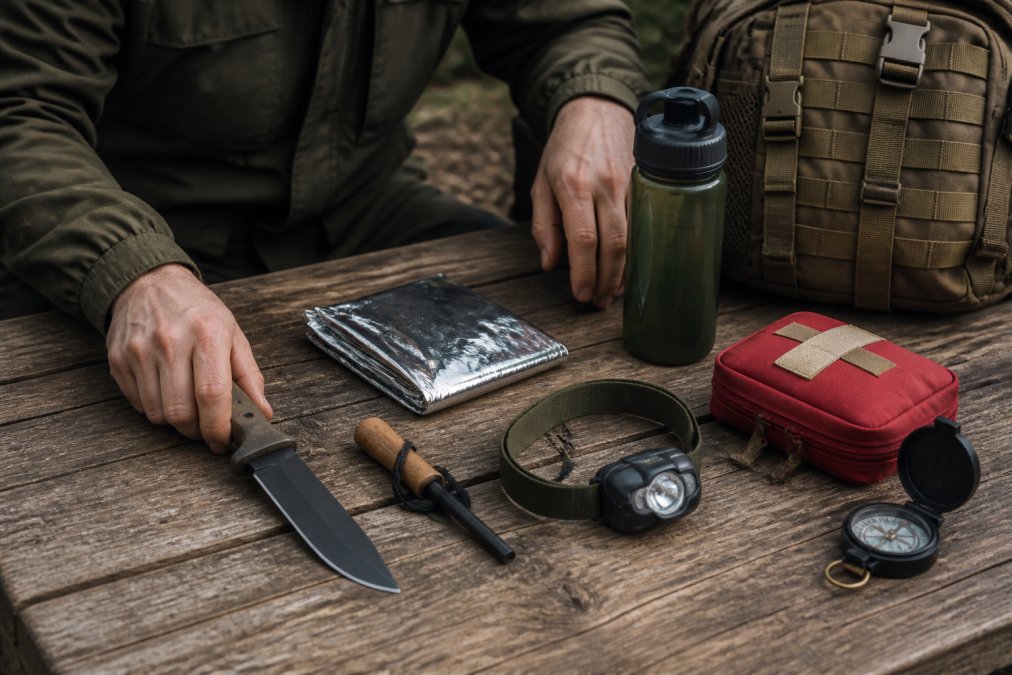
Here is the order that matters, and why.
Water Filtration and Purification
Safe drinking water is an important part of emergency preparedness. Depending on the situation, water may need to be filtered, purified, boiled, or obtained from a stored supply. Include a reliable water-treatment method in your kit and learn how to use it before an emergency.
Fire Starting Tools and Techniques
Fire can provide warmth, light, a way to cook, and an emergency signaling method. A ferrocerium rod is a durable fire-starting option that can produce sparks even in damp conditions, while matches and lighters provide additional convenient ignition methods. Carrying more than one fire-starting option adds useful redundancy to an emergency kit.
Emergency Shelter and Warmth
Emergency shelter can help protect you from wind, rain, cold, and other environmental conditions. Compact emergency blankets, ponchos, tarps, and other lightweight shelter options can provide useful protection while taking up relatively little space in a survival kit.
First Aid Kit Essentials
A well-stocked first aid kit can help you respond to common cuts, scrapes, burns, and other minor injuries. Look for supplies such as adhesive bandages, sterile gauze, wound-cleaning supplies, medical tape, gloves, and other items appropriate for your household and activities.
Navigation, Signaling, and Lighting Tools
Navigation, signaling, and lighting tools can help you determine where you are, attract attention, receive important information, and safely move around in low-light conditions. Consider carrying a compass and appropriate map, a whistle or other signaling device, a headlamp or flashlight, and an emergency radio suited to your preparedness needs.
How to Build a Survival Kit Step by Step
Building a survival kit is easier when you organize it around basic needs first, then add supplies for your specific situation. Start with a suitable bag or container, cover essential preparedness categories, and customize the kit for your household, location, and likely emergencies.
- Pick a durable backpack with multiple compartments, like the Large Capacity Outdoor Backpack
- Add the 5 C's: cutting tool, fire starter, cover, container, and cordage.
- Add water supplies, including stored water when practical and an appropriate filtration or purification method.
- Add shelf-stable emergency food appropriate for the length of time you're preparing for.
- Add a first aid kit sized for your household or group.
- Add lighting, signaling, and communication supplies such as a headlamp, whistle, and emergency radio.
- Add hygiene and sanitation supplies.
- Store the kit somewhere accessible so you can locate it quickly during an emergency.
Kit |
Pieces |
Price |
Best For |
|---|---|---|---|
29 Piece Outdoor Survival Gear Kit |
29 |
Check current price |
Day hikes, glove box |
47 Piece Outdoor Survival Gear Kit |
47 |
Check current price |
Camping, travel |
250-Piece Survival & First Aid Kit |
250 |
Check current price |
Group trips, home |
1 Person Essential Survival Kit |
72-hour supply |
Check current price |
Full home or car kit |
Portable Power Stations for Emergencies and Lighting
Portable power stations for emergencies keep phones, radios, and lights running when the grid goes down. For beginners, the practical starting point is rechargeable lighting rather than a large power unit.

Scenario-Specific Kits: Home, Car, and Trail
One generic kit rarely fits every scenario, because the threats are different. A home kit is built around staying put for days without power or water. A car kit is built around being stranded somewhere between two places. A trail kit is built around moving on foot and carrying everything yourself. Build around where you actually spend time, and start with the one you'd need tonight.
Home Kit: Shelter-in-Place for 72 Hours
A home emergency kit is designed for situations where you may need to remain at home during a power outage, severe weather event, or other disruption. Keep enough water, food, medications, first aid supplies, lighting, sanitation supplies, and other essentials for your household. A commonly recommended starting point is at least one gallon of water per person per day for several days, with additional supplies based on your household's needs and local emergency risks.
1 Person Essential Survival Kit with →
Car Kit: Stranded, Cold, and Waiting
The car kit assumes you are between destinations and may not be able to walk out. The failure modes are cold, dehydration, and being unseen. A 47-piece kit, an emergency blanket, extra layers including gloves and a hat, water pouches that won't burst if they freeze, a headlamp stored in the glove box rather than the trunk, and a reflective or high-visibility item belong in every vehicle.

Trail Kit: Light, Fast, and Redundant
A trail kit should balance preparedness with portability because you'll be carrying everything yourself. A compact survival kit can provide a useful starting point when paired with drinking water or an appropriate water-treatment method, a compass, a map of the area you're hiking, and reliable fire-starting supplies. Consider carrying backup options for critical needs such as navigation, fire starting, and water treatment.
Which One to Build First
Which kit to build first depends on where you live, how you travel, and the emergencies you're most likely to face. Households preparing for severe weather or extended outages may prioritize a home kit, while frequent drivers may place greater importance on a vehicle kit. If you regularly hike or camp, a lightweight trail kit can be an important addition to your preparedness plan.
Gear Maintenance, Expiration, and Psychological Preparedness
Regular maintenance and familiarity with your emergency gear are important parts of preparedness. Building a kit is only the beginning; periodically inspecting supplies, replacing expired or damaged items, and practicing with your equipment can help keep your kit useful over time
A Twice-a-Year Maintenance Cadence
Choose regular dates to inspect your emergency supplies. Checking twice a year can be an easy schedule to remember, but some products may need more frequent attention based on their expiration dates, storage conditions, and manufacturer recommendations.
- Batteries: Batteries: Check batteries periodically for charge, leakage, or corrosion. Recharge rechargeable batteries as needed and replace damaged or depleted batteries according to the device manufacturer's recommendations.
- Water treatment: Water treatment: Check expiration dates and storage instructions on purification products. Clean, dry, and store water filters according to the manufacturer's directions, and protect filters from temperatures or conditions that could damage them.
- Food and water:Food and water: Check expiration or best-by dates on emergency food and stored water products and follow the manufacturer's storage recommendations. Rotate older supplies as needed so your emergency stock remains usable.
- First aid: First aid: Inspect first aid supplies for damaged packaging, expired products, dried-out adhesives, or missing items. Replace individual supplies as necessary rather than relying on the age of the kit alone.
- Fire starters: Fire starters: Inspect and test fire-starting equipment periodically in a safe environment. Keep matches and tinder protected from moisture, and replace damaged or unreliable ignition supplies.
Why Practice and Familiarity Matter
Having emergency gear is more useful when you know how to use it. Practicing with equipment such as fire starters, emergency radios, water filters, and other supplies in a safe environment can help you become familiar with how they work before an emergency occurs.
Conclusion
Building a reliable emergency kit starts with understanding your needs, choosing practical gear, and learning how to use it. The 5 C's provide a useful foundation, while water, first aid, lighting, signaling, food, and scenario-specific supplies can help round out your preparedness plan. Already Survival offers carefully selected survival and emergency preparedness products from trusted suppliers, with free shipping on every order. Start with the essentials and build a kit that fits your household, location, and preparedness needs.
Frequently Asked Questions
What are the 10 most essential items for survival?
A practical survival kit may include a cutting tool, fire starter, safe drinking water or a water-treatment method, emergency shelter, first aid supplies, navigation tools, a headlamp or flashlight, weather-appropriate clothing, emergency food, and a signaling device such as a whistle. The exact items you need will depend on your location, household, activities, and the emergencies you're preparing for.
What are the 5 C's of survival gear?
The 5 C's are cutting, combustion, cover, container, and cordage. A cutting tool handles a variety of practical tasks, combustion refers to a reliable fire-starting method, cover provides protection from the elements, a container helps carry or store water, and cordage can be useful for securing shelter and equipment. Together, these categories provide a simple framework for building a basic preparedness kit.
How do I start building a survival kit on a budget?
Start with the basic preparedness categories and build your kit gradually. Prioritize essentials such as water, first aid, shelter, lighting, and appropriate emergency supplies before adding less important gear. A compact survival kit can provide a convenient starting point, and you can add items over time as your budget allows. Building gradually also gives you time to become familiar with each piece of equipment.
What is the difference between a bug-out bag and a survival kit?
A bug-out bag is generally a portable emergency kit designed to be carried if you need to leave your home quickly. A survival kit is a broader term that can describe portable gear, a vehicle kit, or supplies kept at home for emergencies. The contents of either should be based on the people using it, expected duration, local risks, and whether the kit needs to be carried or stored.
How often should I replace or check my survival gear?
Inspect your survival gear regularly and follow the expiration dates, storage instructions, and maintenance recommendations provided by each product's manufacturer. Check food, water, first aid supplies, batteries, water-treatment products, fire-starting equipment, and other consumables for expiration, damage, leakage, moisture, or deterioration. A regular inspection schedule can help you identify supplies that need to be replaced before an emergency.


