


Last Updated: November 1, 2026
Quick Summary
Emergency medical training for car accidents begins with scene safety: scan for moving traffic, fire or fuel, downed power lines, debris, and unstable vehicles before you approach anyone. If the scene is not safe enough, stay back, warn others, and give the 911 dispatcher a clear report instead of rescuing.
- Never turn your back on live traffic or stand between two vehicles at a crash scene.
- Give 911 the road name, direction of travel, nearest landmark, and number of people hurt.
- Spot red flags like severe bleeding, trouble breathing, confusion, or pale clammy skin, then report and recheck.
- Do not move an injured person unless a vehicle fire or oncoming traffic makes staying put more dangerous.
- Choose a CPR and first aid course with a hands-on skills check rather than online-only training.
Table of Contents
- What to Do at a Car Accident Scene Before Help Arrives
- Scene Safety and Hazard Assessment: The First Skill Any Emergency Medical Training Teaches
- Recognizing Life-Threatening Injuries Without a Diagnosis
- Bleeding Control Training: What You Learn and Why It Matters
- Moving or Not Moving an Injured Person
- CPR and First Aid Classes: Choosing the Right Course for You
- Building a Car Emergency First Aid Kit Around Your Training
- Stock Your Vehicle and Sign Up for a Course
- Frequently Asked Questions
What to Do at a Car Accident Scene Before Help Arrives
Emergency medical training for car accidents starts with one idea: most of the danger at a crash scene has nothing to do with medicine. It has to do with traffic. At Already Survival, we build our roadside guidance around that reality, because a helper who gets struck by a passing vehicle becomes a second patient.
The skills below are the ones that matter most before EMS arrives. Some you can learn in a single class. Others take repeated practice. All of them are worth knowing.
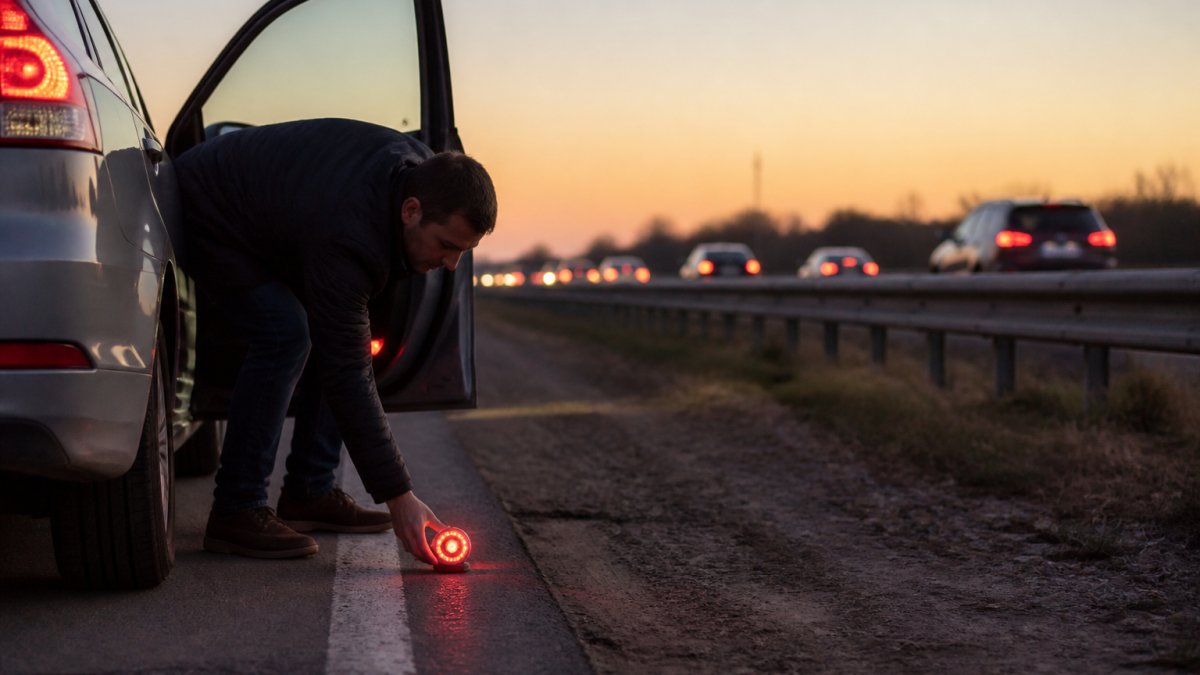
Park Safely and Set Up Warning Lights
Pull well off the travel lane if you can safely stop. Turn on your hazard lights and set your parking brake. Call 911 promptly. Only place a warning light or reflective triangle if you can do so without entering traffic or putting yourself at risk. Do not delay calling 911 to set out warning devices.. Our LED emergency warning light is designed for roadside and vehicle use.
Watch out: never stand between two vehicles, and never turn your back on traffic while setting up.
Call 911 and Give a Clear Report
A good 911 call is short and specific. Give the road name, direction of travel, and nearest landmark. Say how many vehicles are involved and how many people appear hurt. Mention hazards like spilled fuel, downed wires, or blocked lanes. Stay on the line until the dispatcher releases you.
Scene Safety and Hazard Assessment: The First Skill Any Emergency Medical Training Teaches
Scene safety is the practice of scanning for danger before you approach anyone. Every emergency medical training program drills it first, and for good reason: an unsafe rescuer helps no one. What most public guides skip is the reasoning behind each check. Knowing why a hazard matters is what turns a list into a decision.
Run through the same short list every time, and think about what each item tells you:
- Traffic still moving through the scene. This is the hazard most likely to create a second patient. Approach from the shoulder side, keep a barrier between you and live lanes when possible, and never assume drivers have seen the crash.
- Fire, smoke, or the smell of fuel. A fuel smell or visible vapor suggests a fire risk that can escalate quickly. Keep distance, avoid smoking or any spark source, and report it to the dispatcher.
- Downed power lines or damaged poles. Treat every downed line as energized, including lines that look dead. Stay well back and keep others back; only utility personnel can confirm a line is safe.
- Broken glass, sharp metal, or spilled fluids. These cause responder injuries during extrication and cleanup. Watch your footing and keep bystanders from walking through debris.
- Unstable vehicles, especially on a slope. A vehicle resting on an incline, against a barrier, or on soft ground may shift. Do not lean on or reach under a vehicle that may move.
If a hazard is beyond your control, keep back and warn others. Your job at that point is to be a clear set of eyes for the dispatcher, not a rescuer.
The National Highway Traffic Safety Administration tracks roadside crash data, and its guidance consistently points to visibility and lane discipline as the first line of defense. A common pattern in responder training is a simple loop: stop, scan, decide, then act. If the scan says the scene is not safe for you, the correct decision is to stay out and call for help.
Recognizing Life-Threatening Injuries Without a Diagnosis
You do not need to name an injury to know someone needs help fast. You need to spot the patterns that signal trouble, and you need to know what to do with what you see. This is the gap most course descriptions leave open: they teach recognition to professionals but rarely give bystanders a plain-language response plan.
Look for these red flags:
- Severe bleeding that soaks through clothing or pools on the ground
- Trouble breathing, gasping, or noisy breathing
- Change in awareness, from confusion to unresponsiveness
- Pale, cold, or clammy skin, which can point to shock
- A mechanism that suggests spinal risk, such as a high-speed impact or ejection
What most guides miss is that you are not diagnosing. You are reporting and monitoring. A practical pattern is to check, report, and recheck:
- Check each person for the red flags above, starting with anyone who is quiet or unresponsive, since they are often the most seriously hurt.
- Report what you see to the 911 dispatcher in plain words: "She is breathing fast and her skin is clammy," or "He is awake but confused." The dispatcher can guide your next steps.
- Recheck every few minutes. A person who was talking can change quickly, and a change is worth reporting.
Someone struggling to breathe or unable to speak needs immediate help—report this to 911 and follow the dispatcher’s instructions. If someone is unresponsive and not breathing normally, or is only gasping, call 911 on speaker, start CPR, and use an AED as soon as one is available. If they are unresponsive but breathing normally, continuously monitor their breathing and follow dispatcher instructions. Avoid unnecessary movement when a spinal injury is suspected, but do not delay lifesaving care.
Recognized first aid and bleeding-control training is the best way to turn these observations into confident action. Call 911 and follow dispatcher instructions. If the scene is safe, give immediate care for life-threatening conditions, including firm, sustained direct pressure on severe bleeding. Training helps you prepare, but do not delay calling for help or applying direct pressure while waiting for a trained responder.
Bleeding Control Training: What You Learn and Why It Matters
Bleeding control training teaches how to slow serious bleeding with direct pressure and, in some courses, a tourniquet. It is one of the most practical skills in emergency medical training, and it is teachable in a few hours.
Portable Car First Aid Kit with Compact Case for Vehicle, Travel and Emergency →
For life-threatening bleeding, apply firm, sustained direct pressure immediately. Call 911 or have someone else call while you maintain pressure. Follow the dispatcher’s instructions. An emergency tourniquet may be needed for life-threatening bleeding from an arm or leg. Hands-on training helps you learn proper application, but do not delay emergency care while waiting for a trained responder.

Moving or Not Moving an Injured Person
Avoid unnecessary movement after a crash, especially if a head, neck, or spinal injury is suspected.
Movement may be necessary to escape immediate danger or provide lifesaving care, such as opening an airway, performing CPR, or controlling severe bleeding. Follow the 911 dispatcher’s instructions. Move the person only as much as necessary, minimize twisting, and do not force the head or neck into alignment.
Otherwise, leave them in the position found, protect them from cold or overheating, reassure them, and continuously monitor breathing and responsiveness until EMS arrives.
CPR and First Aid Classes: Choosing the Right Course for You
CPR and first aid classes give you the hands-on practice that reading cannot. Most communities offer several formats, so match the course to your role.
Training Pathways by Audience and Skill Level
Audience |
Course focus |
Typical format |
|---|---|---|
Any driver or household member |
Basic first aid and CPR |
Single session, in person |
Parents and caregivers |
CPR, choking, child injury basics |
Short course, blended online plus skills |
Frequent road-trippers and campers |
First aid plus bleeding control |
Half-day, hands-on |
Workplace responders |
CPR, AED, bleeding control |
Multi-hour certification course |
The American Red Cross training page lists current course options by location. Pick one with a hands-on skills check, not online-only.
Building a Car Emergency First Aid Kit Around Your Training
A car emergency first aid kit should match what you actually know how to use. A kit full of supplies you have never opened is clutter.
Start with the basics, then add as your training grows:
- Gloves and a barrier for rescue breathing
- Gauze pads, bandages, and tape
- Antiseptic wipes and a trauma pad
- A light source and a distress flag
- A first aid guide and accident report form
Our portable car first aid kit fits in a glove box, console, or trunk. For a broader look at roadside gear, read our guide to the auto emergency kit. Check your kit twice a year and replace anything expired.

Stock Your Vehicle and Sign Up for a Course
The gap between reading about emergency medical training for car accidents and being ready for one is practice. Take a class. Then build the kit around it. Then rehearse the first three minutes: park, warn, call.
Already Survival stocks practical gear for that plan, with free shipping on all orders and a 30-day return policy on unused items. Browse our auto first aid kit to start your vehicle setup.

Frequently Asked Questions
What training should you take to help at a car accident?
Start with a basic first aid and CPR course that includes hands-on practice, then add a bleeding control class that covers tourniquet application and wound packing. Many community programs, workplaces, and national training organizations offer these courses in a single day. Look for a course with scenario-based practice rather than video-only instruction, because the skills you need at a crash scene are physical and require repetition to retain.
Should you move someone after a car accident?
Usually, avoid unnecessary movement, especially if a head, neck, or spinal injury is suspected. Move someone when necessary to escape immediate danger or provide lifesaving care, such as opening an airway, performing CPR, or controlling severe bleeding. Follow the 911 dispatcher’s instructions, minimize movement and twisting, and do not force the head or neck into alignment.
What should a bystander do first at a car accident scene?
Check for danger before approaching. If you stop, park safely away from moving traffic and turn on your hazard lights. Call 911 promptly with your location, visible hazards, and the number of people who appear injured. Only set out warning devices if doing so is safe, and never delay the emergency call to place them. Approach only if the scene is safe, then follow dispatcher instructions and provide lifesaving care as needed.
What should you keep in a car emergency first aid kit?
A practical kit can include items such as gloves, gauze pads, bandages, trauma pads, antiseptic wipes, and a first aid guide, depending on the kit you choose. Check your kit periodically and replace anything that has been used or has expired.
The real test of preparedness is not what you own. It is what you can do in the first five minutes. Get trained, stock your vehicle with gear you understand, and know your limits. Get started with Already Survival and build a roadside kit that matches your skills.


